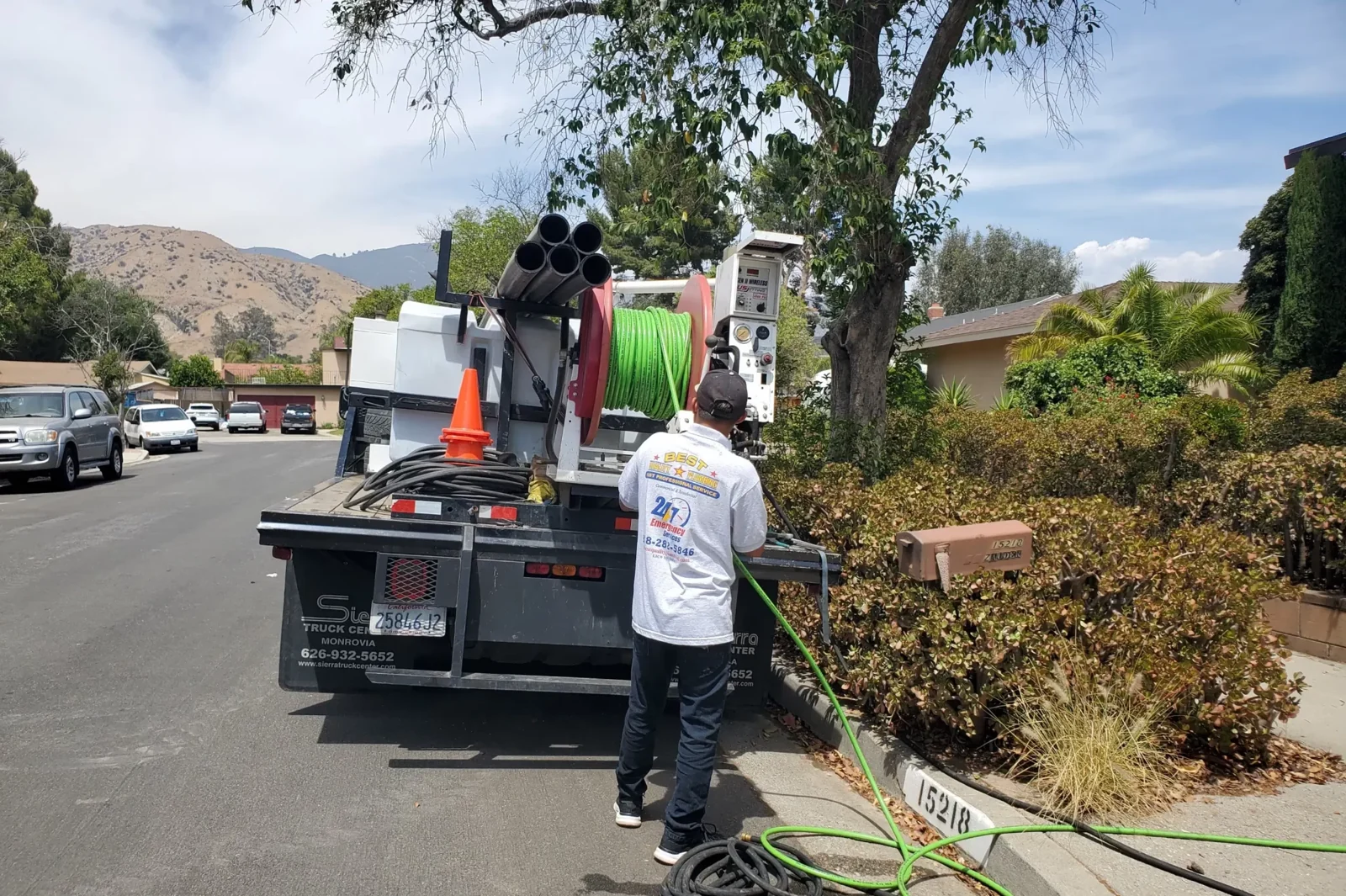
Hydro jetting uses professional water equipment to wash buildup from a drain or sewer line. It can be useful when the issue extends along the pipe rather than sitting at one reachable point. The decision depends on the obstruction, available access, and condition of the line.
FIELD NOTE
Start With The Problem, Not The Method
Heavy grease, sediment, or recurring deposits may call for cleaning along a longer section. A discrete object, collapsed pipe, or severe offset is a different problem. Ask what evidence points to buildup and whether other methods or inspection are needed first.
If several fixtures are backing up, stop using them until the line is assessed. Continuing to send water into a restricted sewer can spread wastewater indoors. The immediate priority is safe control of the backup.
FIELD NOTE
Check The Line And Access
A technician should consider pipe material, known damage, cleanout location, and whether the equipment can be used safely on that route. A camera inspection may help where repeated clogs or suspected damage make pipe condition uncertain. Cleaning can also improve visibility for a follow-up inspection.
Do not assume every old pipe is too fragile or every pipe is suitable. A professional assessment matters because high-pressure cleaning should match the actual line and its condition.
FIELD NOTE
Define A Successful Result
Ask which section will be cleaned and how restored flow will be checked. If deposits were the cause, discuss what can keep them from returning, such as changes to kitchen disposal habits or a maintenance plan based on observed conditions.
Jetting removes material inside a pipe; it does not repair a broken or displaced section. If the same symptoms recur quickly, ask what further inspection would distinguish new buildup from a structural problem.
Need Help With
Hydro Jetting?
If this sounds like the problem you’re having, read about our hydro jetting service or tell us what’s happening.
For urgent help, call (818) 282-5846