
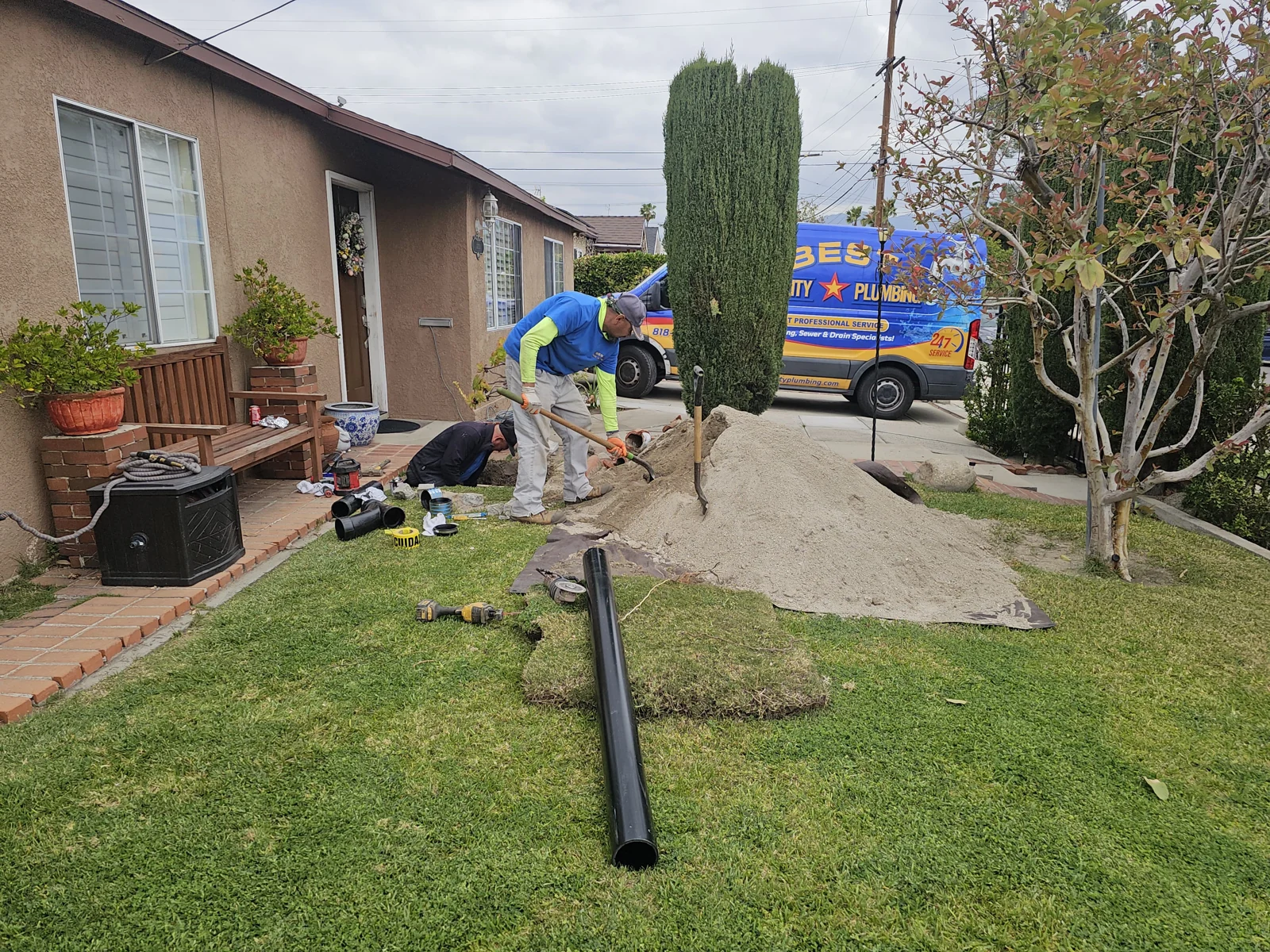
Pipe bursting replaces a sewer line along the path of the old one without opening a trench the whole way. It is called trenchless, but it is not digging-free. Knowing what the pits are for makes it easier to understand the plan for your yard or driveway.
FIELD NOTE
The Basic Process
A bursting head, a cone-shaped tool slightly larger than the old pipe, is pulled through the existing line. As it moves, it fractures the old pipe and pushes the pieces outward into the surrounding soil.
A new pipe, commonly HDPE, is attached behind the bursting head and pulled into the space the old pipe occupied. Once it is through, it is connected at each end and checked.
FIELD NOTE
Why There Are Pits
An entry pit is where the new pipe goes in, and a receiving pit is where the equipment pulls from. The pits give room to make connections to the house line and the downstream line. Extra access may be needed where other branches tie in.
Before any digging, underground utilities are located through DigAlert (811). Private lines such as irrigation or landscape lighting may not be marked by that service, so mention any you know about.
FIELD NOTE
What Affects Suitability
Soil type, depth, the old pipe’s material, how close other utilities run, and bends along the route all affect whether bursting is practical. Some routes are better handled by lining or excavation.
Sewer replacement may require a permit from the local building authority. Ask what permit applies, where each pit will be, and what restoration of the pit areas is included.
Need Help With
Trenchless Sewer Services?
If this sounds like the problem you’re having, read about our trenchless sewer services service or tell us what’s happening.
For urgent help, call (818) 282-5846