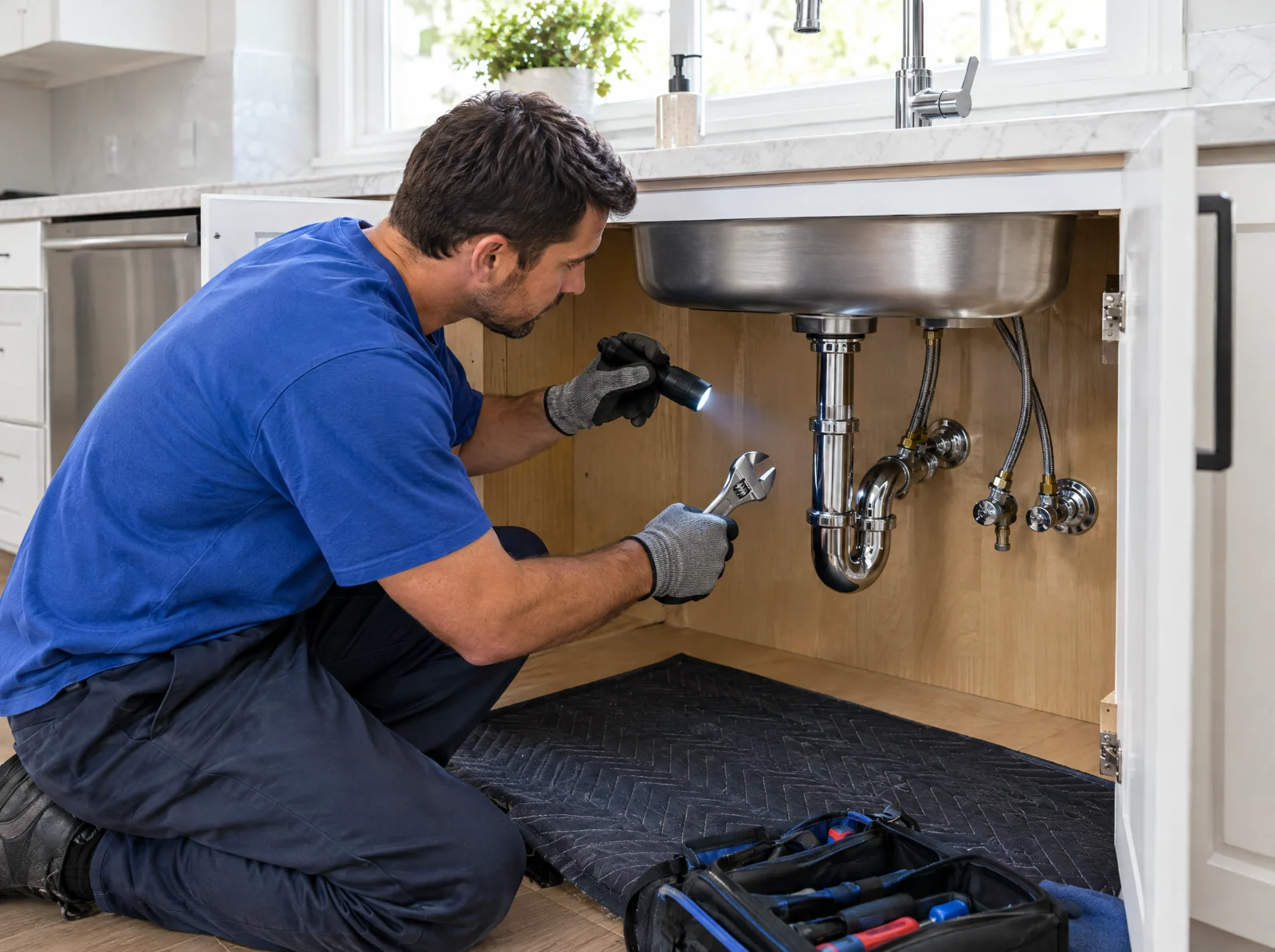
When a disposal leaks from its body or the motor fails, replacing it is often the practical choice. The right unit fits your cabinet, connects to your existing drain and dishwasher line, and suits how your kitchen is used.
FIELD NOTE
Fit And Connections
Measure the space under the sink, including the distance from the sink to the drain outlet in the wall or floor. A taller unit may require changes to the drain connection. If a dishwasher drains through the disposal, the new unit needs a matching inlet.
Some units can mount to the existing sink flange; others need new mounting parts. Ask whether the existing mounting can be reused for the model you are considering.
FIELD NOTE
How You Use The Kitchen
Think about how often the disposal is used and what goes into it. A household that cooks often may want a different unit than one that uses it lightly. Noise level and the type of switch are also worth considering.
If your home uses a septic system, check with your septic professional before choosing a unit, since not every system is suited to a disposal.
FIELD NOTE
Before Installation Day
If you are supplying the unit, share the make and model so fit and connections can be checked ahead of time. Confirm whether removal of the old unit is included in the estimate.
The electrical connection should be checked as part of the work and must be safe for the appliance. After installation, ask the installer to run the unit and check the sink flange, dishwasher connection, and drain for leaks.
Need Help With
Garbage Disposal Services?
If this sounds like the problem you’re having, read about our garbage disposal services service or tell us what’s happening.
For urgent help, call (818) 282-5846