
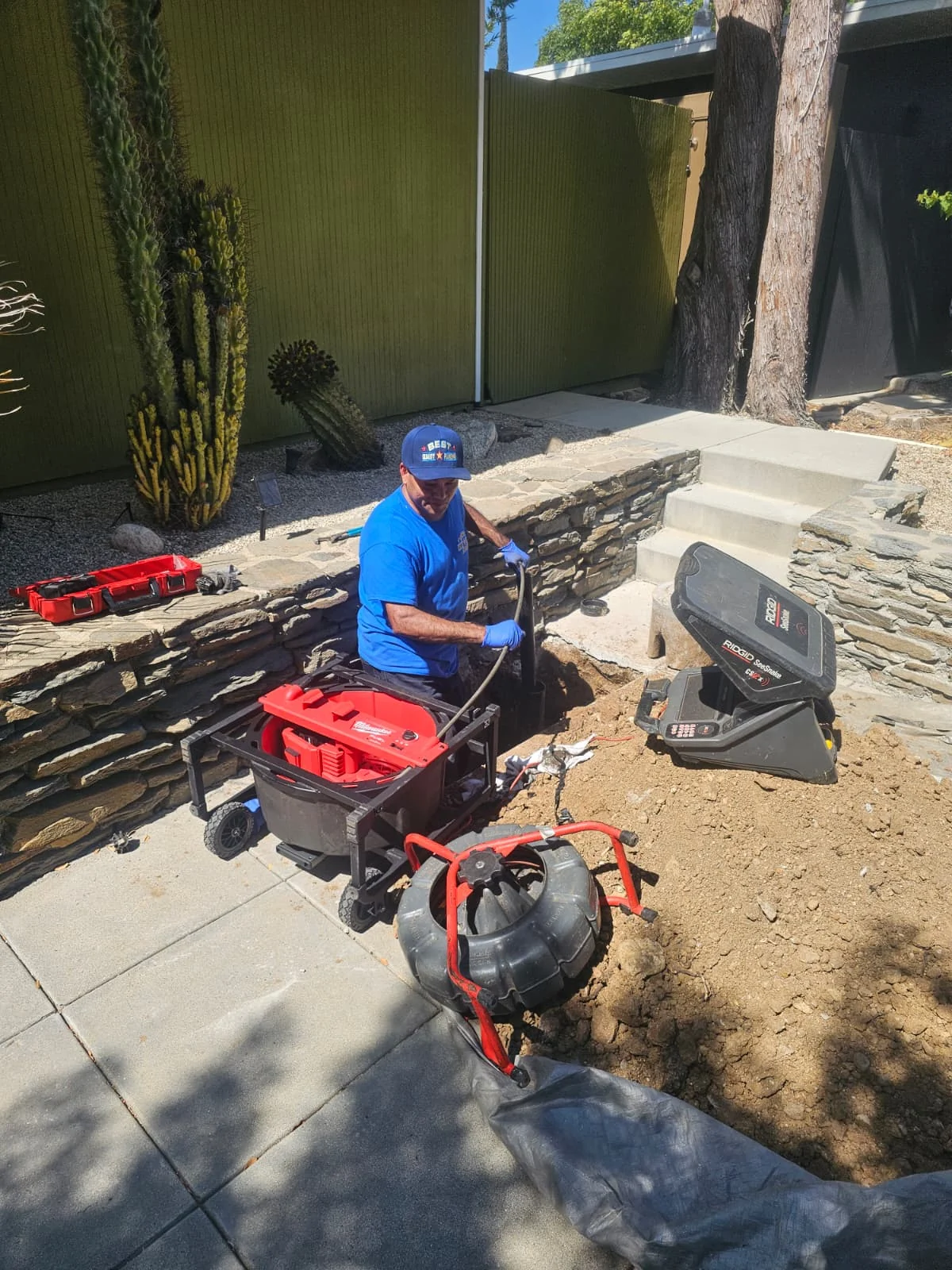
A broad sewer estimate is hard to evaluate without knowing where the problem lies. Camera inspection can help define a repair location and show whether other reachable segments also have visible issues. It should leave you with a clearer scope, not merely a video to interpret alone.
FIELD NOTE
Define The Proposed Work Area
Ask the contractor to identify the visible defect and mark its approximate location before excavation is planned. Clarify how the access point, camera route, and distance reading support that mark. Pipe depth, nearby utilities, and surface materials may affect the final work area.
If the camera could not reach the suspected segment, ask how that uncertainty will be handled. Cleaning or another access point may be needed before the repair scope can be stated confidently.
FIELD NOTE
Compare Scope With Condition
A single visible defect may support a localized repair, while multiple failing sections may justify discussing broader work. Ask what was seen in the adjoining pipe and whether there are signs of recurring problems. The recommendation should explain why its length matches the evidence.
Camera footage cannot reveal every condition in surrounding soil or behind a blocked view. It may be one part of the decision alongside service history, access, pipe material, and local requirements.
FIELD NOTE
Preserve A Before-And-After Record
Save the original recording and a short written description of its findings. Ask whether the finished line will be checked and what proof of restored flow will be available after work. This record is useful if symptoms recur or another project affects the same route.
If sewage is actively returning to a fixture, avoid using the drains while options are reviewed. An inspection can guide the permanent solution, but wastewater exposure and continued backup need immediate attention.
Need Help With
Camera Inspection?
If this sounds like the problem you’re having, read about our camera inspection service or tell us what’s happening.
For urgent help, call (818) 282-5846