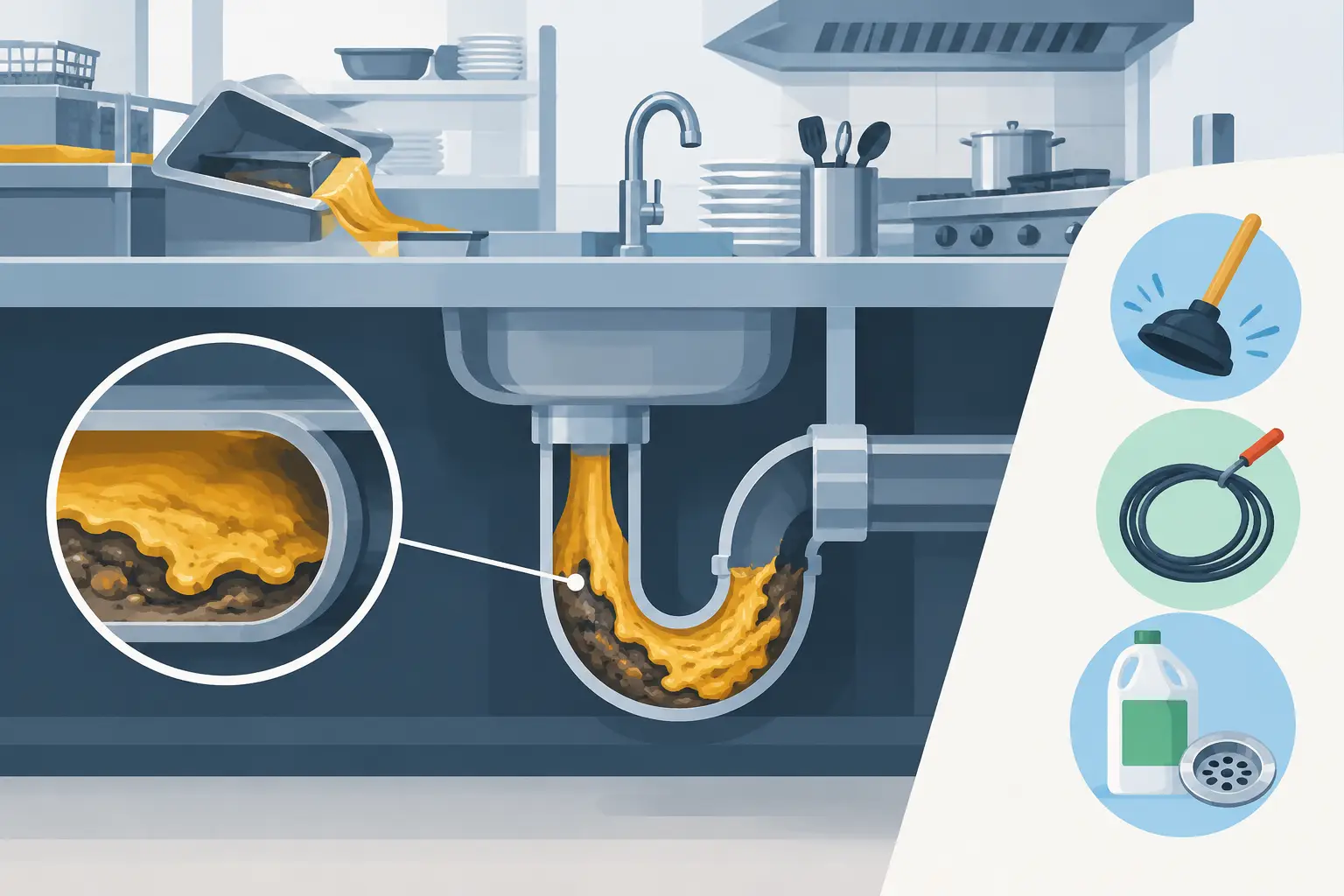
A restaurant grease clog rarely starts with a dramatic backup. More often, the first sign is a prep sink that drains a little slower after the lunch rush, a floor drain that smells unpleasant, or water pooling where it should not. Ignore those early warnings, and a manageable service call can turn into a closed kitchen, a sanitation issue, and lost revenue.
Grease-heavy wastewater is hard on commercial drain lines because fats, oils, and grease do not stay liquid once they leave a hot pan or dishwasher. They cool, stick to pipe walls, and trap food particles, soap residue, and debris. Over time, the clear opening inside the pipe gets smaller until wastewater cannot move through fast enough.
Why restaurant grease clogs build so quickly
A commercial kitchen puts far more demand on its plumbing than a typical home. Fryers, grills, dish stations, mop sinks, prep areas, and floor drains can all contribute to the same drainage system. Even a careful staff can create a problem if grease management is inconsistent or the plumbing system has an underlying issue.
The common culprit is pouring oil, sauce, or greasy food scraps into a sink. But the problem is not always that obvious. Plates rinsed before loading, greasy mop water, meat trimmings, dairy residue, and cleaning water from equipment all carry fats into the drain. Hot water may make grease look like it has washed away, but it usually cools farther down the line and hardens there.
A grease interceptor or trap is designed to separate grease before wastewater enters the sewer line. It is not a disposal system, and it cannot do its job when it is overdue for pumping, improperly sized, or bypassed by a plumbing connection. In older buildings, undersized pipes, low pipe slope, rough pipe interiors, or existing scale can make buildup happen even faster.
Warning signs you should not wait on
Drain problems during a busy shift can be disruptive, but they are also useful information. Slow drainage, recurring backups, gurgling sounds, foul odors, or water rising from a nearby floor drain usually mean the restriction is growing. If several fixtures drain slowly at once, the blockage may be beyond one sink line.
Pay close attention to the pattern. A single slow hand sink may have a local obstruction. A dish area sink that backs up when the prep sink runs points to a shared branch line. Wastewater coming up through a floor drain can indicate a more serious blockage in the main kitchen line or downstream plumbing.
A temporary improvement after plunging does not mean the problem is fixed. Grease can shift and allow water through for a while, then collect again a few feet away. Repeated backups are a reason to have the line properly inspected and cleaned rather than asking staff to keep working around it.
What to do when a restaurant grease clog happens
First, stop sending water into the affected fixtures. Do not run the dishwasher, dump mop buckets, or rinse dishes through a backed-up sink. Continued water use can force contaminated wastewater onto the floor and into areas that should stay clean.
Next, protect the area. Keep employees and customers away from standing water, especially near electrical equipment or walkways. Remove food, clean utensils, and packaging from the immediate area to prevent contamination. If you can safely do so, identify which fixtures are draining normally and which are affected. That information helps a plumber isolate the line quickly.
Avoid reaching for harsh chemical drain cleaners. These products are often ineffective against heavy commercial grease buildup, and they can damage certain pipes, create fumes, and make conditions more dangerous for anyone who later services the line. They also do not remove the hardened material coating the pipe wall.
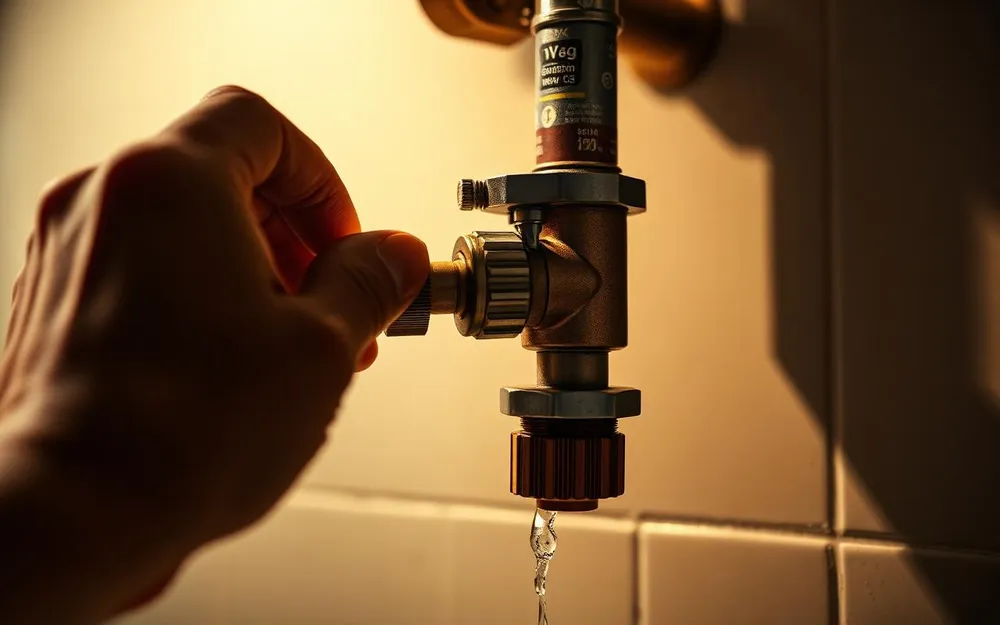
For a complete blockage, recurring backup, or wastewater coming from a floor drain, call a qualified commercial plumber. Depending on the location and severity of the blockage, the correct repair may involve professional drain cabling, high-pressure water jetting, grease interceptor service, camera inspection, or repair of a damaged pipe. The right method depends on what is actually in the line and where it is located.
The difference between clearing a drain and solving the cause
Opening a blocked drain is urgent, but it is only the first step. A cable machine can break a path through a blockage, restoring flow quickly. That may be the right response when a kitchen needs to get moving again. However, cabling may leave grease coating the pipe walls, allowing buildup to return sooner than expected.
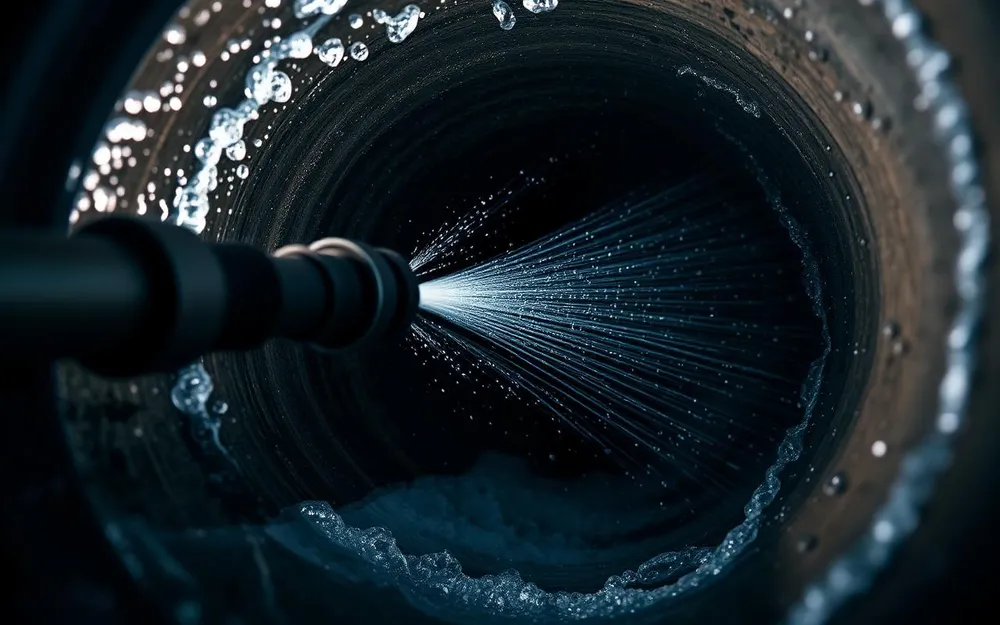
For thick grease accumulation, professional hydro jetting can be a better long-term cleaning method. It uses controlled high-pressure water to scour residue from the inside of the pipe. It is not appropriate for every situation. Fragile, damaged, or improperly connected pipes may need inspection before jetting, which is why a professional diagnosis matters.
A drain camera inspection is especially valuable when the same line keeps clogging. The camera can reveal grease buildup, pipe scale, root intrusion, cracks, bellies in the line, or construction debris. Without that information, a business may keep paying for repeated drain clearing while the real cause remains in place.
Preventing restaurant grease clogs during daily operations
Good drain habits protect your plumbing, reduce emergency calls, and make the kitchen easier to run. The goal is simple: keep grease and solids out of the drain system before they become a blockage.
Train staff to scrape plates, pans, and cookware into the trash or approved food-waste containers before washing. Collect used fryer oil in the designated recycling container. Never use a floor drain as a disposal point for greasy mop water or food scraps.
Sink strainers also matter. They catch solids that combine with grease inside the line. Empty and clean them consistently, not only when they look full. If a strainer is missing or damaged, replace it promptly.
Grease interceptor maintenance needs a written schedule, not a guess. The proper pumping frequency depends on the volume of cooking, the size of the interceptor, local requirements, and the type of food prepared. A high-volume kitchen may need service far more often than a small cafe. Keep records of pumping and maintenance so recurring problems are easier to track.
It also helps to assign responsibility. When drain care belongs to everyone, it can end up belonging to no one. A manager or shift lead should confirm that grease containers are used correctly, strainers are cleaned, and warning signs are reported before a small issue becomes an emergency.
When plumbing trouble may be bigger than grease
Not every kitchen backup is caused by grease alone. If the problem affects restrooms, multiple floor drains, or fixtures outside the kitchen, the issue may be in a larger building drain or sewer line. A recurring blockage in the same location can also point to a sagging pipe, pipe damage, tree roots, or a poorly installed connection.
Property managers should take repeat service calls seriously, particularly in multi-tenant buildings. A restaurant may be the first place to show symptoms because it puts a high volume of wastewater through the system, but the source could be shared plumbing. Clear communication between the tenant, property manager, and plumber helps prevent blame from replacing a real diagnosis.
Get the kitchen back to normal with the right repair
A backed-up drain can disrupt food preparation, employee safety, cleaning routines, and customer service in a matter of minutes. Best Quality Plumbing Services provides practical commercial drain troubleshooting for businesses that need a clear answer and a dependable repair. The focus should be on restoring flow safely, identifying the cause, and helping prevent the next interruption.
If your sinks are slowing down, odors are becoming more noticeable, or a floor drain has started backing up, schedule service before the next rush puts more strain on the line. Fast action is usually cleaner, less disruptive, and far less costly than dealing with a full kitchen shutdown.