A sewer problem is rarely convenient. Slow drains, repeated backups, sewage odors, or wet spots in the yard can quickly turn into damage, cleanup costs, and a major interruption at home or at a rental property. When comparing trenchless versus traditional sewer repair, the right choice comes down to more than the price of the repair itself. The pipe’s condition, its location, access to the line, and the long-term reliability of the solution all matter.
A qualified plumber should inspect the sewer line with a camera before recommending either option. That inspection shows where the damage is, how extensive it is, and whether the pipe can be repaired without excavation. A clear diagnosis prevents homeowners and property managers from paying for the wrong fix.
What Traditional Sewer Repair Involves
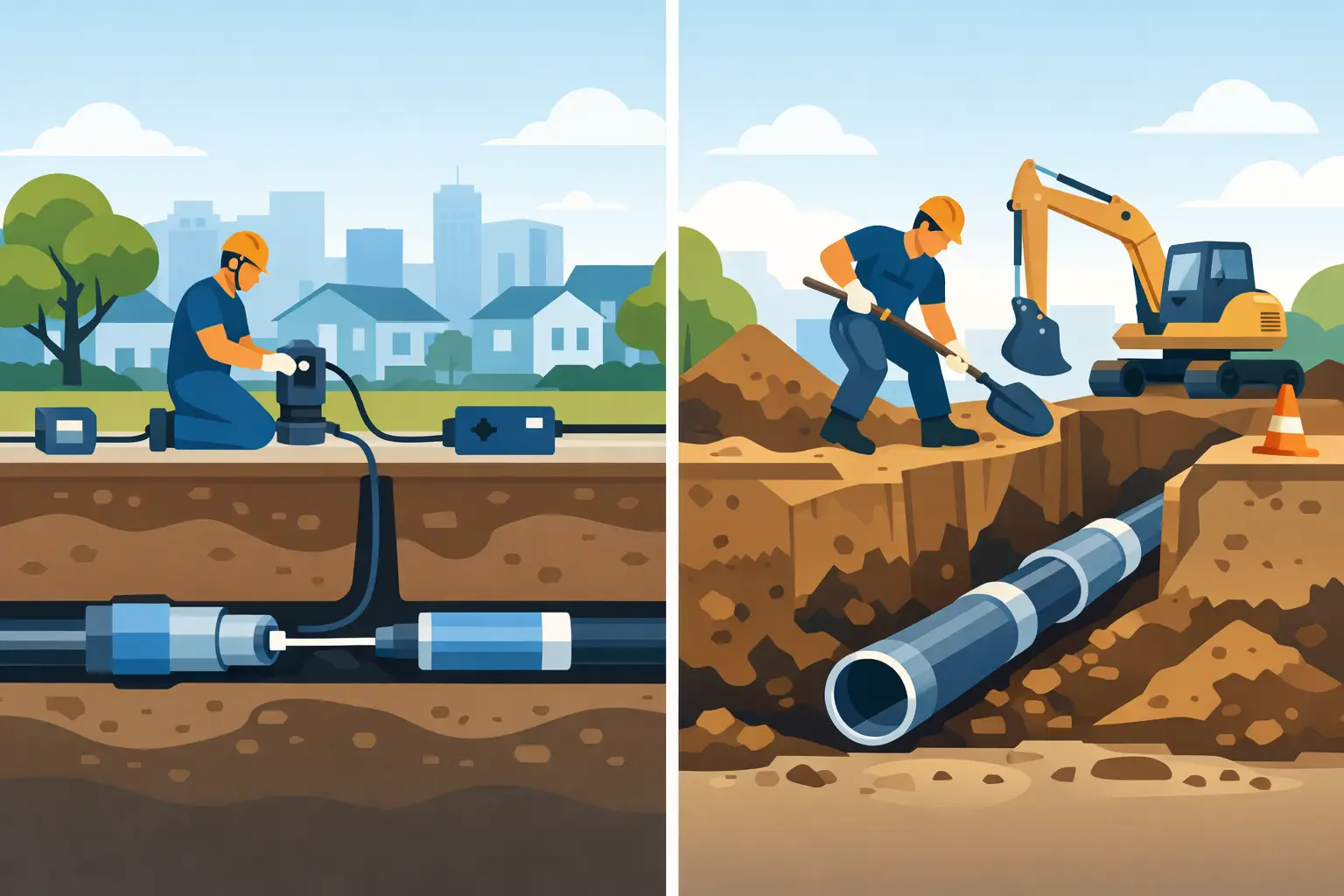
Traditional sewer repair means excavating the ground to reach the damaged pipe. Depending on the location of the sewer line, that may involve opening a section of lawn, driveway, walkway, landscaping, or flooring. The damaged section is then repaired or replaced, the trench is backfilled, and the surface is restored as needed.
This method has been used for decades because it gives the plumber direct access to the line. If a pipe has collapsed, shifted significantly, has a severe belly, or contains extensive damage, excavation may be the most dependable way to correct the issue. It allows the crew to remove failed pipe completely, rebuild the line with proper slope, and address surrounding conditions that could cause future trouble.
Traditional repair is not automatically the less desirable option. It can be the best answer when the sewer line needs major structural work. The downside is disruption. Excavation can affect hardscaping, trees, landscaping, and daily access to parts of the property. Restoration costs also need to be part of the decision, especially when a line runs beneath concrete or a finished outdoor space.
How Trenchless Sewer Repair Works
Trenchless sewer repair is designed to restore or replace underground sewer lines with little or no full-length digging. Rather than opening a trench along the entire pipe, plumbers generally work from one or two access points. The two common trenchless methods are pipe lining and pipe bursting.
With pipe lining, also called cured-in-place pipe lining, a resin-saturated liner is inserted into the existing pipe and cured to form a new pipe inside the old one. This can seal cracks, small gaps, root intrusion points, and deteriorated sections when the original pipe still has enough structure to support the process.
Pipe bursting is a replacement method. A bursting head is pulled through the old pipe, breaking it apart while drawing a new pipe into place. This approach can be useful when the existing sewer line is too damaged for lining but a full open trench would be especially disruptive.
Trenchless work can be a strong option for sewer lines beneath driveways, patios, mature landscaping, or other areas where digging would create expensive restoration work. It often reduces property disruption and may shorten the overall time the site is under construction. That does not mean every sewer issue qualifies for trenchless service.
Trenchless Versus Traditional Sewer Repair: The Real Differences
The biggest difference is access. Traditional repair reaches the pipe from above through excavation. Trenchless repair works through limited entry and exit points, using specialized equipment to rehabilitate or replace the line underground.
That difference affects cost, schedule, and property impact. A trenchless repair may have a higher specialized equipment cost, but it can save money when it avoids removing and rebuilding concrete, pavers, landscaping, or flooring. A conventional excavation may have a lower pipe repair cost in some situations but require more restoration afterward. There is no honest one-size-fits-all price comparison without inspecting the line and the surrounding property.
The condition of the existing pipe is equally important. Lining usually works best for pipes that are cracked, corroded, or affected by root intrusion but still generally hold their shape. A pipe that is crushed, badly offset, sagging, or fully collapsed may not be a good lining candidate. Pipe bursting can handle more serious deterioration, but it still depends on the pipe route, soil conditions, utility clearances, and available access points.
Traditional excavation gives the greatest ability to correct major slope problems. Sewer lines need proper grade to carry waste away from the building. If a section has sunk and is holding water, often called a belly, simply lining that section may not solve the underlying drainage issue. Digging up the pipe and resetting it at the proper slope can be the more reliable repair.
When Trenchless Repair Makes Sense
Trenchless repair is worth considering when the main issue is limited to cracks, aging joints, corrosion, or root entry and the line has not lost its basic shape. It is particularly useful when the sewer route runs under a driveway, landscaped yard, patio, or another finished surface that would be costly to remove and replace.
It can also be a practical choice for occupied homes, rental properties, and small commercial buildings where minimizing disruption matters. Fewer excavated areas may mean less cleanup, less noise, and less time spent restoring the property after the plumbing work is complete.
Before approving trenchless work, ask whether the line has been fully camera-inspected and cleaned. A sewer camera inspection should identify the pipe material, depth, damage locations, offsets, root intrusion, and any standing water. The plumber should also explain which trenchless method is being proposed and why it fits the condition of that specific line.
Homeowners should understand that pipe lining slightly reduces the inside diameter of the pipe. In a properly sized residential sewer line, this is often not a problem. Still, it must be evaluated carefully, especially if the property already has recurring capacity issues or an undersized drain system.
When Traditional Excavation Is the Better Call
Excavation is often the better choice when a sewer line is collapsed, severely misaligned, improperly sloped, or damaged over a section that cannot be rehabilitated from inside. It may also be necessary when the pipe needs to be rerouted, when access is too limited for trenchless equipment, or when local permit and inspection requirements call for a specific approach.
A traditional repair can also make sense when the damaged line is located in an open, easy-to-reach area of the yard. If there is little concrete, landscaping, or structure to protect, digging may be straightforward and cost-effective. In those cases, paying extra for trenchless methods may not provide enough benefit to justify the added expense.
This method offers a direct view of the pipe and surrounding soil. That can be valuable when there are concerns about past improper repairs, damaged connections, or unstable ground. Once the line is exposed, the plumber can replace damaged sections, confirm proper connections, and rebuild the sewer route correctly.
Do Not Choose Based on Price Alone
A low quote can become expensive if it addresses only the visible symptom. For example, clearing roots may restore flow temporarily, but roots will often return through cracked joints or openings in an aging sewer line. Likewise, lining a pipe with a serious belly may leave the drainage problem in place.
A useful repair estimate should explain the problem found, the recommended method, the expected scope of work, and what restoration is included or excluded. Ask whether permits, inspections, sewer camera verification, access point repairs, and cleanup are part of the proposal. If there are several viable options, a dependable plumber should explain the trade-offs without pressuring you into the most expensive one.
For landlords and property managers, it is also worth considering future maintenance. A repair that reduces recurring backups, emergency calls, and tenant disruption may be the better value even if its initial cost is higher. For homeowners, protecting a driveway, outdoor living area, or mature landscaping may make trenchless work more attractive.
Start With the Sewer Line Diagnosis
The decision between trenchless and traditional repair should begin with facts, not assumptions. A professional camera inspection can show whether the line needs cleaning, spot repair, lining, bursting, or full excavation. It also helps identify urgent risks before a backup causes damage inside the building.
Best Quality Plumbing Services helps homeowners and property managers evaluate sewer problems clearly, explain the available repair options, and move forward with work that fits the actual condition of the line. If your drains keep backing up or you suspect a damaged sewer pipe, addressing it early gives you more repair options and more control over the cost and disruption.