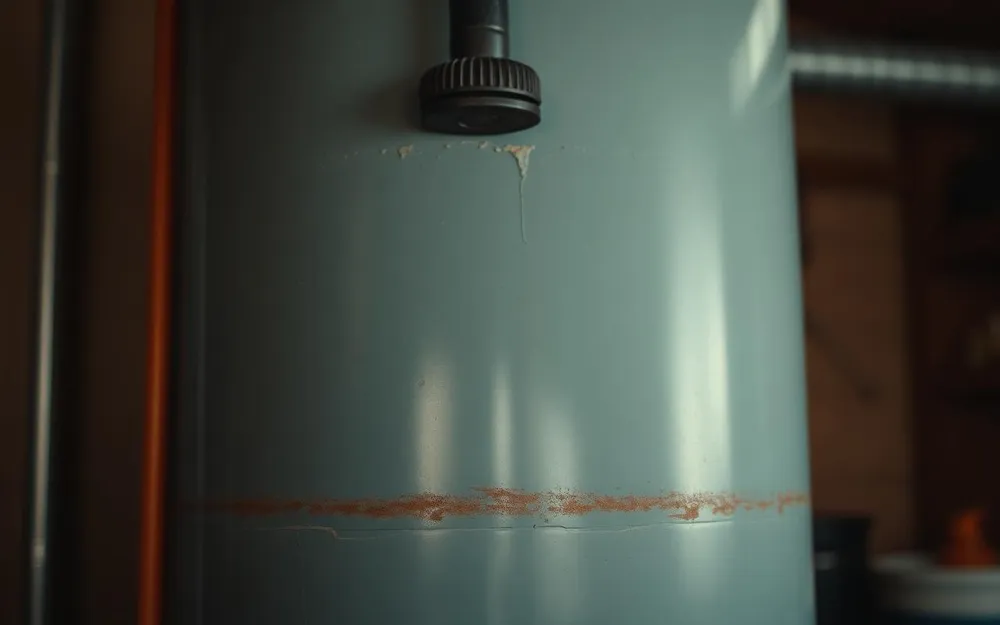
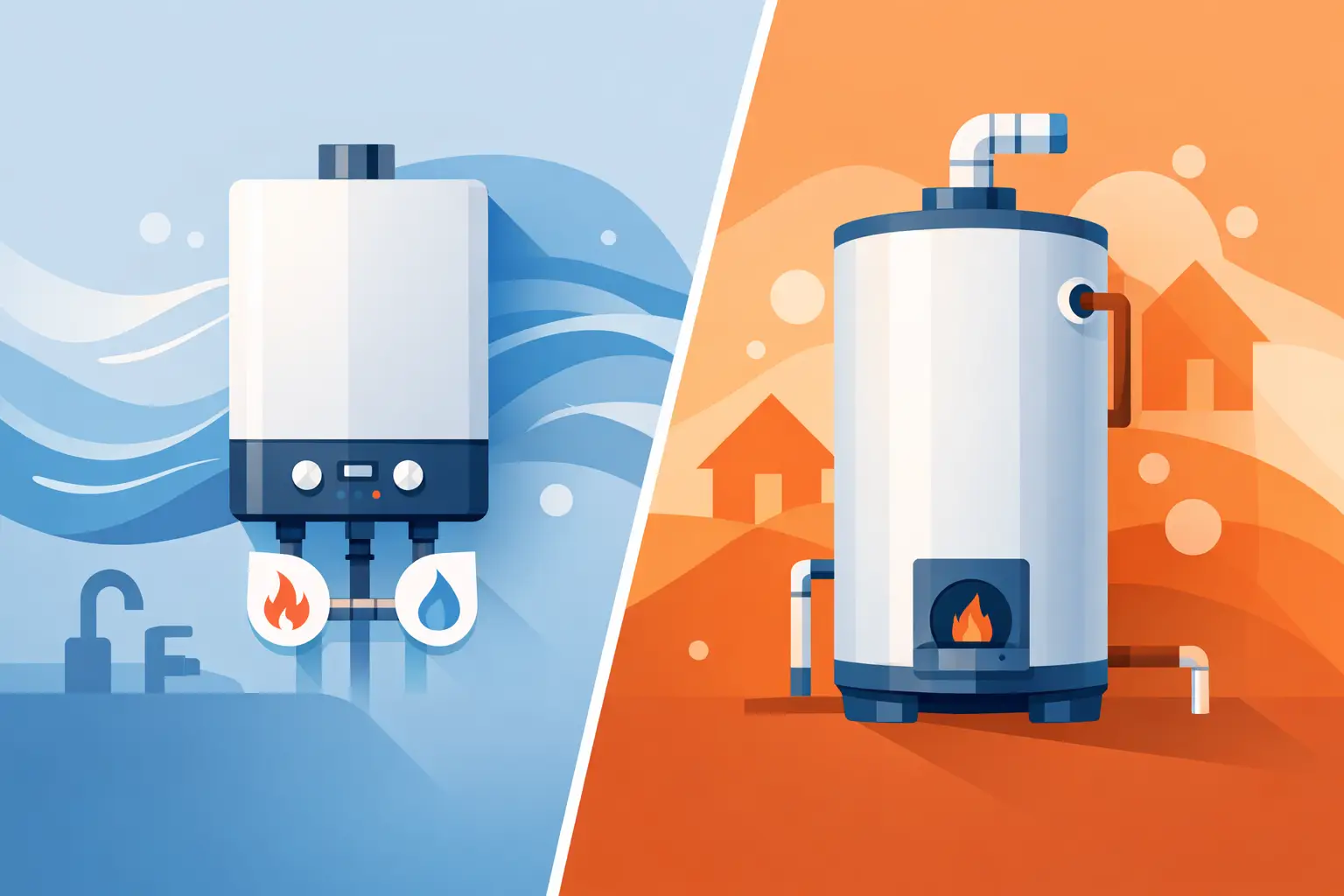
A failing water heater has a way of making the decision feel urgent. Cold showers, rusty water, a leaking tank, or a unit that cannot keep up with your household all point to the same question: should you replace it with the same type or make a change? Comparing a tankless versus standard water heater starts with your daily hot-water use, your budget, and what your home can support safely.
A tankless unit can be an excellent long-term upgrade for the right household. A standard storage-tank heater remains a dependable, practical choice for many homes and rental properties. The best answer is not always the newest option. It is the system that delivers reliable hot water without creating unnecessary installation costs or future service problems.
Tankless Versus Standard Water Heater: The Main Difference
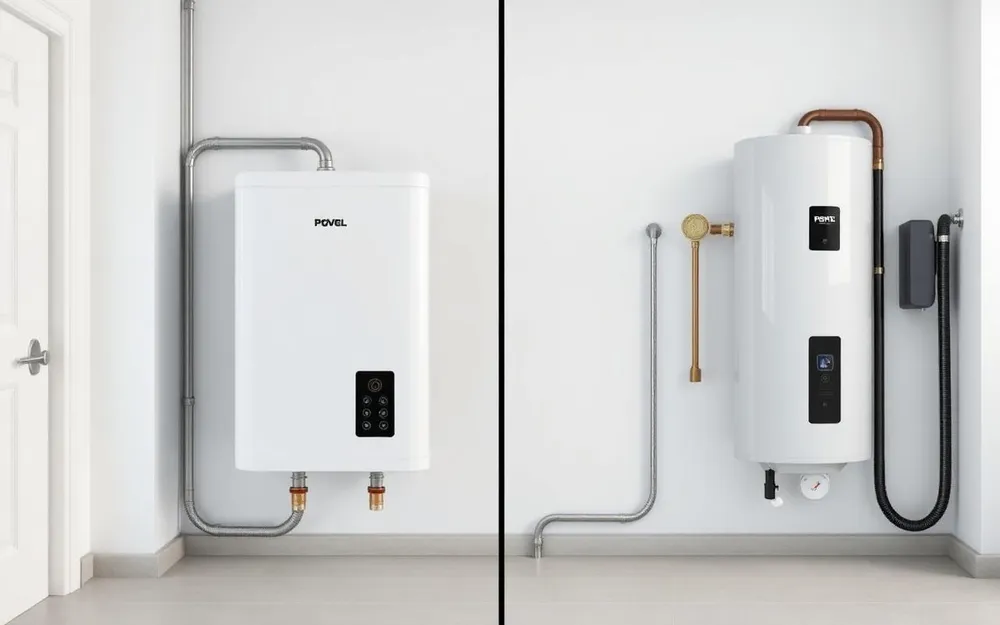
A standard water heater stores a supply of heated water in a tank, commonly 40 to 75 gallons in a home. The burner or electric elements heat the water, and the unit maintains that stored supply until someone opens a hot-water fixture. Once the available hot water is used, the tank needs time to recover.
A tankless water heater heats water only when you need it. Cold water moves through the unit when a faucet, shower, or appliance calls for hot water. The system senses the flow and heats the water as it passes through. There is no large tank holding a reserve of hot water.
That difference affects nearly every part of the ownership experience: purchase price, installation requirements, available hot water, operating costs, space needs, and maintenance.
When a Standard Tank Water Heater Makes Sense
A traditional tank water heater is familiar, proven, and generally less expensive to install. If your existing unit is in a workable location and the replacement uses the same fuel type and similar capacity, a straightforward tank-for-tank replacement can often be completed with fewer changes to your plumbing, venting, or electrical system.
For homeowners managing an unexpected replacement, that lower upfront cost matters. Tank units also work well for households with predictable hot-water habits. A properly sized 50-gallon or 75-gallon unit can comfortably serve many families, especially when showers, laundry, and dishwashing are spread throughout the day.
A tank heater may be the better fit when:
- You need to keep replacement costs as manageable as possible.
- Your current hot-water use is moderate and rarely exhausts the tank.
- Your home does not have the gas capacity, venting route, or electrical service needed for a tankless upgrade.
- You own a rental property where simple replacement and predictable maintenance are priorities.
The trade-off is standby heat loss. Because the tank stores heated water, it uses energy even when nobody is running hot water. It also has a limited supply. A long shower followed by a load of laundry and another shower can leave the last person waiting for recovery.
Tank heaters also take up more floor space and typically have a shorter service life than a well-maintained tankless unit. Water quality, maintenance history, and installation quality all affect longevity, so the label alone does not tell the whole story.
When Tankless Is Worth the Higher Upfront Cost
The biggest appeal of a tankless water heater is continuous hot water within its capacity. It does not run out in the same way a storage tank does. For a busy household, that can mean fewer arguments about who showered first and less planning around laundry or dishwasher use.
Tankless units are compact and mount on a wall, which can free up useful space in a garage, utility room, closet, or exterior installation area. They can also be more energy efficient, particularly in homes that do not use a large amount of hot water every day. Since the unit heats water on demand, it avoids the constant energy use required to keep a tank hot.
However, “endless hot water” has an important limit: flow rate. A tankless heater can only heat a certain number of gallons per minute at a given temperature rise. In colder weather, incoming water is cooler, so the unit has to work harder to bring it up to shower temperature. Running two showers, a washing machine, and a dishwasher at the same time may exceed the capacity of an undersized unit.
For that reason, tankless sizing should be based on peak simultaneous use, not just the number of bathrooms. A household that regularly runs multiple showers at once needs a unit sized for that demand. Installing a smaller model to save money can lead to lukewarm water and disappointed homeowners.
Installation Can Change the Math
A tankless upgrade is not always a simple swap. Gas tankless heaters often require a larger gas line because they draw a high amount of fuel while operating. They may also need new dedicated venting and proper combustion air. Depending on the model and location, installation may involve changes to the vent path, water piping, gas piping, electrical connection, and drainage.
Electric tankless models avoid gas venting, but they can require substantial electrical capacity. Some need multiple dedicated circuits and a high-amperage service. In older homes, upgrading the electrical panel may become part of the project.
This does not make tankless a poor choice. It means the price of the unit is only one part of the decision. A professional assessment should confirm the condition and size of existing gas lines, venting, electrical service, water pressure, and installation location before anyone promises a final price.
A standard tank replacement can also require code updates, including a properly installed drain pan, seismic strapping, expansion tank, temperature and pressure relief discharge pipe, and venting corrections. Quality installation matters just as much as the type of heater you choose. A new unit installed incorrectly can create leaks, poor performance, safety concerns, and an early replacement expense.
Energy Use and Long-Term Costs
Tankless systems often cost less to operate, but actual savings depend on your household. A family that uses a lot of hot water may see more benefit than a household where one or two people are rarely home. Fuel type, local utility prices, temperature settings, and maintenance also affect the monthly bill.
A high-efficiency tank water heater can narrow the operating-cost gap, especially when replacing an older, inefficient model. On the other hand, a tankless system may last longer, which can improve its value over time. Many tankless units can serve for 15 to 20 years with proper care, while tank units commonly have a shorter lifespan.
Neither option is maintenance-free. Tank water heaters should be checked for sediment buildup, leaks, corrosion, and safety-valve issues. Tankless units need periodic flushing to remove mineral scale, especially in areas with hard water. Skipping this service can reduce efficiency and damage internal components.
Choose Based on How Your Home Actually Uses Hot Water
If your priority is a lower upfront cost and dependable performance, a correctly sized standard tank heater is often the sensible choice. It is especially practical when your existing setup supports a simple replacement and your household does not frequently demand hot water from several fixtures at once.
If your priority is saving space, reducing standby energy loss, and supporting regular back-to-back showers, tankless may be worth the added investment. It is most successful when the unit is carefully sized and the installation is designed around your home’s gas, electrical, and venting requirements.
Property managers should also consider serviceability. A standard tank may be quicker and less expensive to replace in an emergency. A tankless unit may provide a longer-term benefit in a high-demand property, but only if tenants use enough hot water to justify the installation cost and required upgrades.
Get the Sizing Right Before You Replace Anything
The wrong size water heater creates problems no matter which style you select. A small tank runs out of hot water. An undersized tankless unit cannot maintain temperature when demand rises. An oversized system can cost more than necessary to buy and operate.
Before replacement, identify how many people use the home, how many bathrooms may be active at the same time, whether you have high-flow shower fixtures, and when laundry and dishwashing usually happen. A plumbing professional can evaluate those needs alongside the home’s existing utility connections and recommend a system that fits the job.
For homeowners in Sylmar and nearby communities, Best Quality Plumbing Services can help evaluate replacement options clearly and install the right system with the workmanship your home depends on. The goal is simple: reliable hot water when you need it, without paying for a solution that does not match your household.