A sink that will not drain during the morning rush or a shower backing up around your feet usually starts as a small annoyance and turns into a bigger plumbing problem fast. If you are searching for how to remove a drain clog, the goal is not just to get water moving again. It is to clear the blockage without damaging your pipes or creating a mess that comes right back.
Some clogs are simple. Hair near the drain opening, soap buildup, and minor grease residue can often be handled with basic tools and a careful approach. Others point to a deeper issue in the drain line, especially if more than one fixture is slow or you keep dealing with the same backup.
How to remove a drain clog without making it worse
The first rule is simple: do not keep pouring chemical drain cleaner into the pipe. These products can be harsh on older plumbing, create fumes, and leave dangerous standing water in the fixture if they do not work. They also make the job harder and less safe if a plumber needs to service the drain afterward.
Start by looking at how the drain is behaving. If water is draining slowly but still moving, you may be dealing with a partial clog close to the opening. If the fixture is fully backed up, gurgling, or smells bad, the blockage may be thicker or farther down the line.
Before you do anything, clear the area and put on gloves. If you are working on a bathroom sink, tub, or shower, remove visible debris around the stopper or drain cover. In a kitchen sink, stop using the fixture until you have checked for standing grease, food scraps, or a garbage disposal issue.
Start with the simplest fix
In many cases, the quickest solution is to remove what is sitting right at the drain opening. Pull out the stopper if your sink design allows it. Hair, soap residue, toothpaste sludge, and similar buildup often collect there. A basic plastic drain tool or a bent wire hook can help you lift out the material.
Use a steady hand. You want to pull the clog up and out, not push it deeper into the line. Once the debris is removed, run hot water for a minute or two and see whether the drain clears.
If you are working on a kitchen sink, hot water may help loosen light grease buildup, but only if the clog is minor. If the sink is completely backed up, adding more water can overflow the basin and create a cleanup problem.
Try a plunger the right way
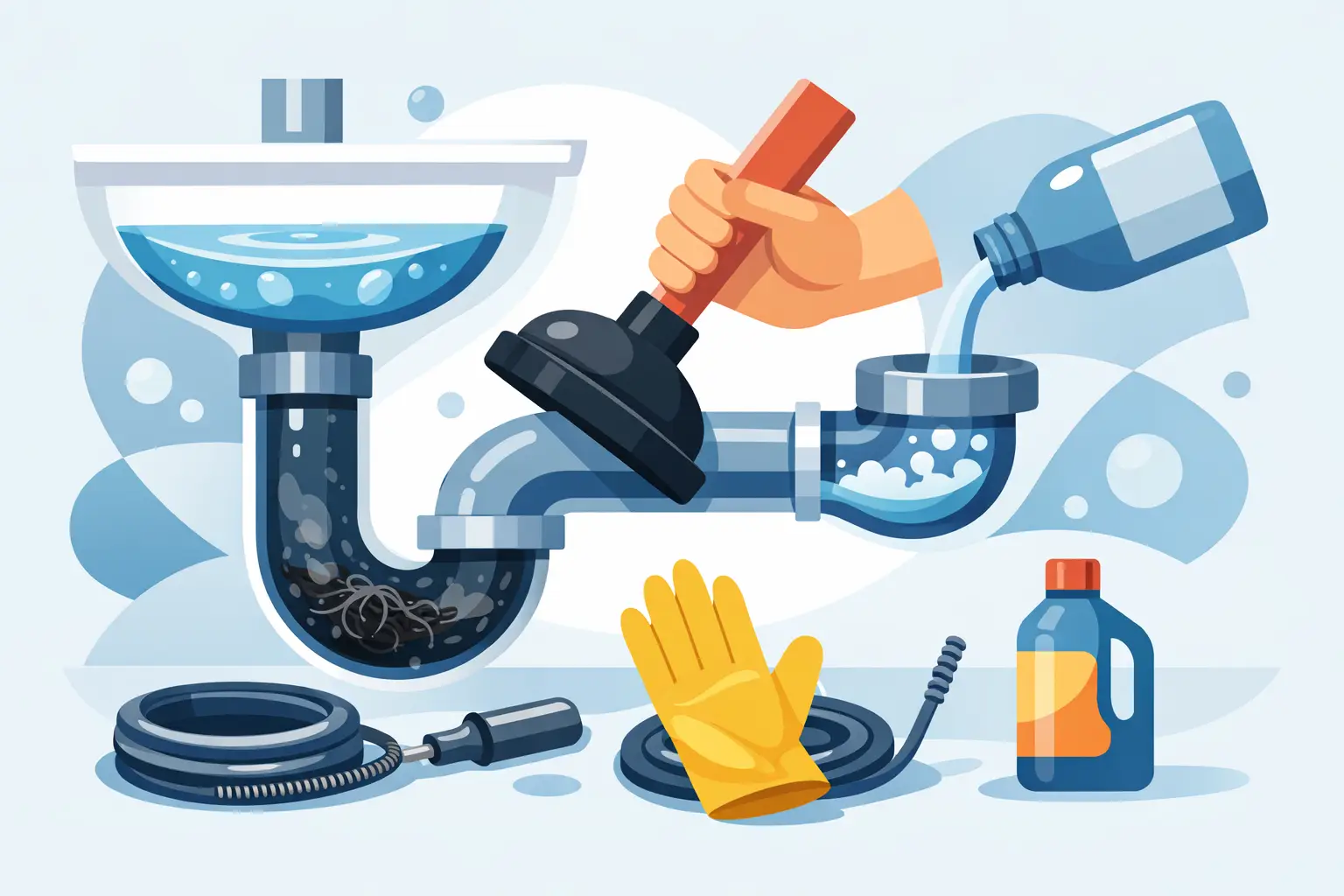
A sink or tub plunger works well on many common clogs, but technique matters. Add enough water to cover the plunger cup so it can create a seal. If you are plunging a bathroom sink, block the overflow opening with a rag to improve suction.
Use firm, controlled plunges instead of aggressive force. Too much pressure can loosen older slip joints under the sink or splash dirty water back out. After several plunges, stop and test the drain. If water starts moving normally, flush with warm water for a few minutes.
Plunging is often effective for clogs caused by soap, soft organic material, or minor buildup. It is less effective when the blockage is a dense hair mass or grease-heavy kitchen clog farther down the pipe.
Safe methods for common household drains
Different drains clog for different reasons, so the best method depends on the fixture.
Bathroom sink clogs
Bathroom sinks usually clog from hair, soap scum, and grooming products. Remove the stopper, clean it thoroughly, and use a drain tool to pull out anything trapped below. This solves a large share of bathroom sink backups.
If the sink is still slow, the clog may be sitting in the trap below. Place a bucket under the trap before loosening fittings. This step can be messy, and if the connections are old or tight, it may be better to stop and call a professional instead of risking a leak.
Shower and tub clogs
These drains are commonly blocked by hair and soap residue. Remove the cover if possible and use a drain tool to pull up the clog. This is usually more effective than pouring products into the drain and hoping for the best.
Be careful with tubs and showers that have older trim or fragile covers. Forcing parts loose can create a second repair. If the drain keeps backing up after surface cleaning, the clog may be deeper in the branch line.
Kitchen sink clogs
Kitchen clogs are different. Grease, food waste, coffee grounds, and soap film build up over time and create sticky blockages that are harder to clear. If your sink has a garbage disposal, make sure the disposal is off before checking anything. Resetting the unit or clearing a jam may solve the problem if the issue is with the disposal itself.
If the clog is in the drain line, use a plunger first. Avoid putting oils, fats, or fibrous food waste down the sink afterward, or the clog may return quickly.
When a drain snake makes sense
If basic steps do not work, a hand auger or drain snake can sometimes break up or pull out a clog. This tool is useful when the blockage is beyond the reach of your hand tool but still limited to a local fixture line.
Feed the snake in slowly. Forcing it can scratch porcelain, damage the drain opening, or jam the cable in the pipe. Once you feel resistance, rotate gently and work the tool back and forth until the clog loosens. Then pull the cable out carefully and test the drain with water.
This is where many homeowners run into trouble. A drain snake can help, but it can also push soft blockages deeper, catch on fittings, or damage older piping if used aggressively. If you are not comfortable with the tool or the drain is still slow after one attempt, it is usually smarter to stop there.
Signs the clog is bigger than a basic fix
Some drain problems are not isolated at all. They are signs of a deeper blockage, vent issue, or main line problem that needs professional equipment.
If more than one drain is slow, if toilets are bubbling when sinks drain, if water backs up in a tub when you run another fixture, or if bad odors keep coming back, the problem may be beyond a single trap or branch line. Recurring clogs are another warning sign. If you clear the same drain again and again, the underlying blockage was never fully removed.
Standing water around floor drains, sewage smells, and backups in lower-level fixtures should be taken seriously. Those are not wait-and-see problems. They can point to a main drain issue that puts your property at risk for water damage and contamination.
When to call a plumber
If you have tried the safe basics and the drain still is not clearing, bringing in a plumber can save time, prevent pipe damage, and get to the real cause faster. A professional can identify whether the issue is a local clog, buildup in the line, a drainage defect, or a larger sewer problem.
This matters even more in older homes, multifamily properties, and small commercial spaces where repeated backups can affect more than one sink, restroom, or tenant. Property managers and landlords often lose more time by trying temporary fixes than by scheduling proper service right away.
At The Best Quality Plumbing, the priority is straightforward: clear the problem correctly, protect the plumbing system, and keep disruption to a minimum. That is what most customers want when a drain stops working. Not a guess. A fix that holds.
How to keep the clog from coming back
Once the drain is flowing again, a few habits make a real difference. Use strainers in bathroom and kitchen drains. Keep grease, oil, coffee grounds, and food scraps out of the sink. Clean stoppers and drain covers regularly instead of waiting for buildup to turn into a backup.
For showers and tubs, hair removal at the surface is one of the simplest ways to avoid recurring clogs. For kitchen sinks, routine hot water flushing can help with light residue, but it is not a cure for grease disposal habits that keep feeding the line.
The main thing is not to ignore a slow drain. A minor slowdown is often the easiest time to address the issue before it becomes a full blockage, overflow, or after-hours plumbing call.
A clogged drain does not always mean a major repair, but it does mean the system is telling you something. Handle the easy fixes carefully, and when the problem points to something deeper, get it checked before a simple clog turns into a bigger mess.