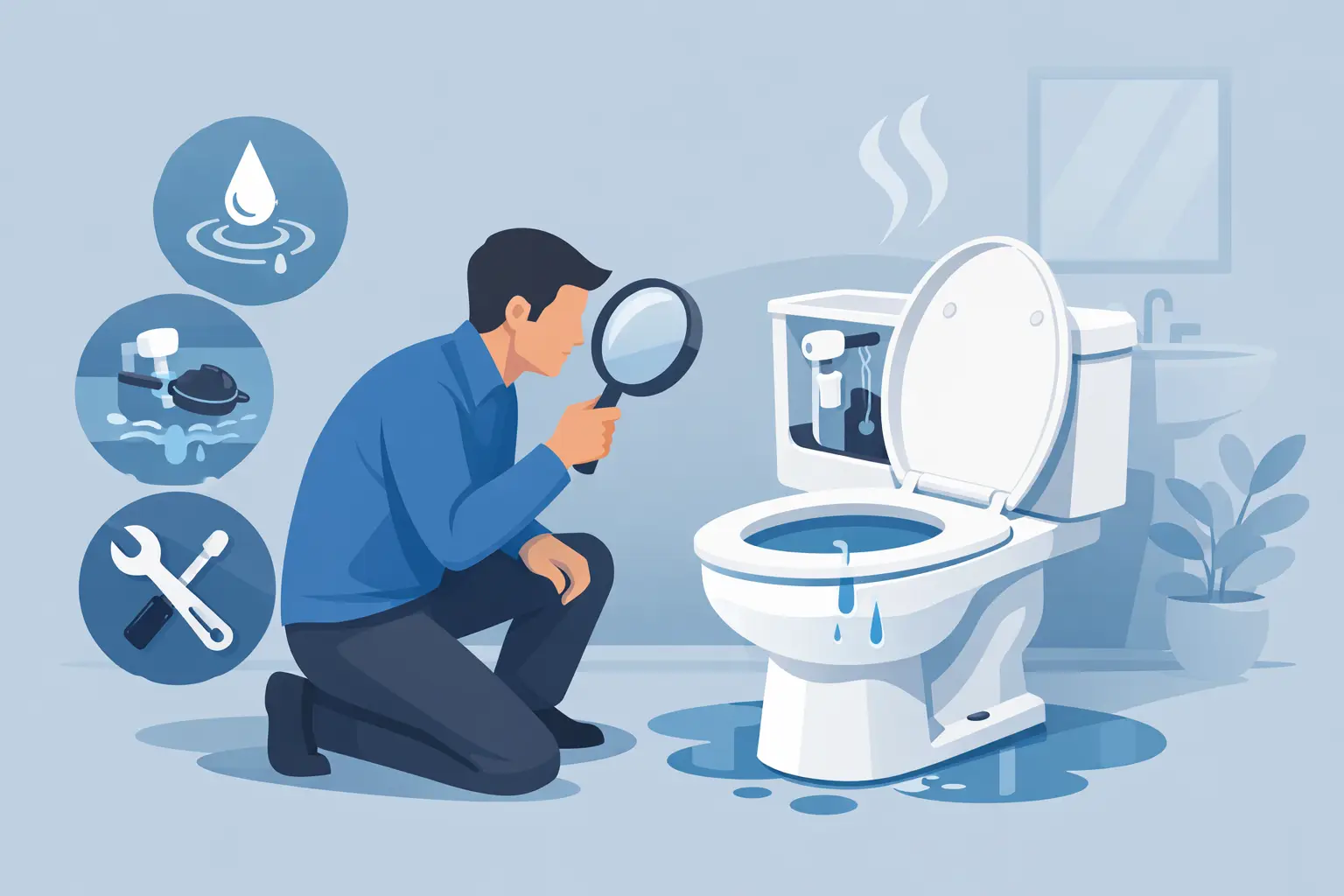
A toilet that refills when nobody has used it is not a minor annoyance. That quiet hiss or occasional burst of water can waste hundreds of gallons, raise a utility bill, and signal a part inside the tank is no longer doing its job. Knowing how to diagnose a running toilet helps you decide whether a simple adjustment will solve it or whether it is time to schedule a repair.
Most running toilets have a problem inside the tank, not in the bowl or the drain line. Start with a few basic observations before taking anything apart. You can often identify the cause in minutes.
Start by Confirming the Toilet Is Actually Running
Remove the tank lid carefully and set it on a towel or stable surface. Porcelain lids chip and crack easily. Flush once, then watch the tank refill. A properly working toilet fills to its set water level and stops completely.
If you hear water continuing to run into the tank, the fill valve may be the issue. If the tank seems full but water still moves into the bowl, the flush valve or flapper is more likely at fault. Some toilets run only every few minutes because water slowly leaks from the tank into the bowl, causing the fill valve to turn on again.
A simple dye test can confirm a slow leak. Add several drops of food coloring to the tank water and do not flush for 15 to 20 minutes. If color appears in the bowl, water is leaking past the flapper or flush valve seal.
How to Diagnose a Running Toilet Inside the Tank
The tank contains a few working parts, and each leaves a different clue when it fails. Check them in this order to avoid replacing a part that was not causing the problem.
Check the Flapper First
The flapper is the rubber seal at the bottom of the tank. When you flush, it lifts so water can enter the bowl. After the flush, it should settle flat and create a watertight seal.
A worn, warped, stiff, or dirty flapper is one of the most common reasons a toilet runs intermittently. Mineral buildup can prevent it from sealing. So can a chain that is too short, tangled, or caught beneath the flapper. There should be a small amount of slack in the chain when the flapper is closed.
Look closely at the rubber. If it feels rough, has cracks, or no longer lies flat on the valve seat, replacement is usually the sensible repair. Flappers are inexpensive, but the correct size and style matter. Using a part that does not match the toilet can create another leak instead of fixing the first one.
Inspect the Flush Valve and Seal
If the flapper looks sound but dye still enters the bowl, inspect the plastic or brass flush valve opening underneath it. The rim where the flapper seals may be coated with mineral deposits, chipped, or damaged. On newer toilets with a canister-style flush valve, the large rubber seal at the base can wear out in the same way.
Cleaning light buildup may restore the seal. A cracked flush valve body, however, is a more involved repair because the tank often needs to be removed from the bowl. That is a good point to call a plumber, particularly if the mounting bolts are old, corroded, or difficult to access.
Watch the Fill Valve and Float
The fill valve brings water into the tank after a flush. It should shut off when the water reaches the marked fill line or the proper level set by the manufacturer. If water keeps flowing after the tank is full, raise or lower the float according to the valve design, then flush and test again.
Many modern valves use a small cup-shaped float that slides on the valve shaft. Older toilets may have a float ball attached to a metal arm. Either type can become misadjusted, worn, or obstructed.
Listen for a steady hissing sound near the fill valve. If adjusting the float does not stop the water, the valve may be failing internally. Sediment and mineral deposits can also interfere with its operation, especially in areas with hard water. Replacing the fill valve is often straightforward, but the water supply must be shut off and the tank drained before work begins.
Check the Refill Tube Position
The narrow refill tube sends a small stream of water into the overflow tube during the refill cycle. It should be clipped to the top edge of the overflow tube, not pushed down inside it.
When the refill tube is inserted too far into the overflow tube, it can create a siphoning effect. Water may continue to move from the tank into the bowl, keeping the fill valve active. Repositioning the tube correctly can stop a running toilet without replacing any parts.
Look at the Overflow Tube
The overflow tube is the open vertical tube in the center of the tank. It prevents overfilling by sending excess water into the bowl. If the tank water level rises above the top of this tube, the fill valve or float setting is the likely problem.
Water should normally stop about an inch below the top of the overflow tube, although the exact level depends on the toilet. If water is constantly spilling into the tube, do not ignore it. The toilet will keep wasting water until the fill valve is adjusted or repaired.
Rule Out Problems Outside the Tank
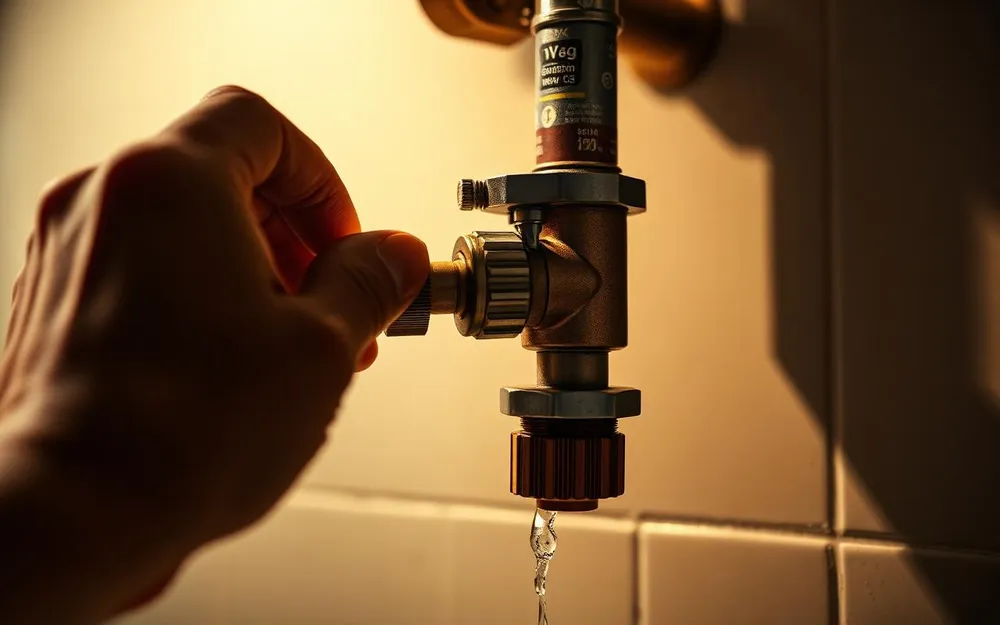
Most cases are tank-related, but a few outside issues deserve attention. Check the shutoff valve near the wall and the supply line beneath the tank for drips. A supply connection leak does not usually make a toilet run, but it can cause water damage and should be addressed promptly.
Also pay attention to the bowl water level. If the bowl is unusually high, low, or slowly changing without a flush, there could be a blockage, venting issue, or an internal toilet problem beyond a basic flapper repair. A toilet that runs and also flushes weakly may have more than one issue.
For landlords and property managers, it is worth asking occupants when the sound occurs. “It runs after every flush” points toward a fill valve or refill adjustment. “It starts running in the middle of the night” often points to a slow flapper leak. Those details help speed up the repair visit.
When You Can Try a Simple Repair
A homeowner can often handle a visible chain adjustment, repositioned refill tube, or a properly matched flapper replacement. Turn off the shutoff valve first, flush to empty the tank, and keep a towel nearby for the remaining water.
Avoid forcing old plastic components or overtightening supply connections. Tank parts become brittle with age, and a small repair can turn into a cracked fitting or leak if handled too aggressively. If you are unsure which replacement part fits, take a clear photo of the tank interior and the toilet model information before buying anything.
When to Call a Plumber for a Running Toilet
Call for professional help when the toilet continues running after a flapper or float adjustment, when the flush valve appears cracked, or when water is leaking onto the floor. You should also call if the shutoff valve will not fully close, the tank bolts are heavily corroded, or the toilet has repeated problems despite new internal parts.
A dependable plumber can identify whether the issue is a worn component, an incorrect prior repair, mineral buildup, or a toilet that is no longer worth repairing. In older fixtures, replacing several internal components may make sense. In other cases, a complete toilet replacement is the better long-term value, especially if the existing unit wastes water with every flush.
Best Quality Plumbing Services helps homeowners and property managers resolve toilet problems without guesswork. The goal is not simply to stop the noise for a day, but to correct the cause and make sure the fixture operates reliably.
If you need to keep the water from running before service arrives, turn the shutoff valve clockwise until it stops. Then flush once to reduce the water in the tank. That small step can prevent unnecessary water waste while you arrange a proper repair.