A slow drain has a way of turning a normal day into a mess. One sink backs up, the shower starts pooling water around your feet, and suddenly a small nuisance feels like a bigger plumbing problem. If you are wondering how to clean out a drain without making things worse, the good news is that many minor clogs can be handled with a few basic steps and the right approach.
The key is to work carefully. Some drain problems are simple surface clogs caused by hair, soap buildup, grease, or food debris. Others point to a deeper blockage in the line. Knowing the difference can save you time, protect your pipes, and help you decide when it makes sense to bring in a professional.
How to clean out a drain safely
Start by identifying which drain is clogged. A bathroom sink, kitchen sink, tub, and shower can each clog for different reasons, so the best method depends on what is likely stuck in the line.
For most household drains, begin with the simplest fix. Remove any visible debris near the drain opening. In a bathroom sink or shower, that often means hair and soap residue. In a kitchen sink, it may be food scraps or grease buildup close to the strainer. Wear gloves and clear out what you can reach by hand.
Next, try hot water. Not boiling water in every case, because that can be too harsh for some pipes or loosened fittings, especially in older plumbing. Instead, use very hot tap water or carefully pour hot water down the drain in stages. This works best on soap scum and light grease buildup, but it will not do much for a solid blockage.
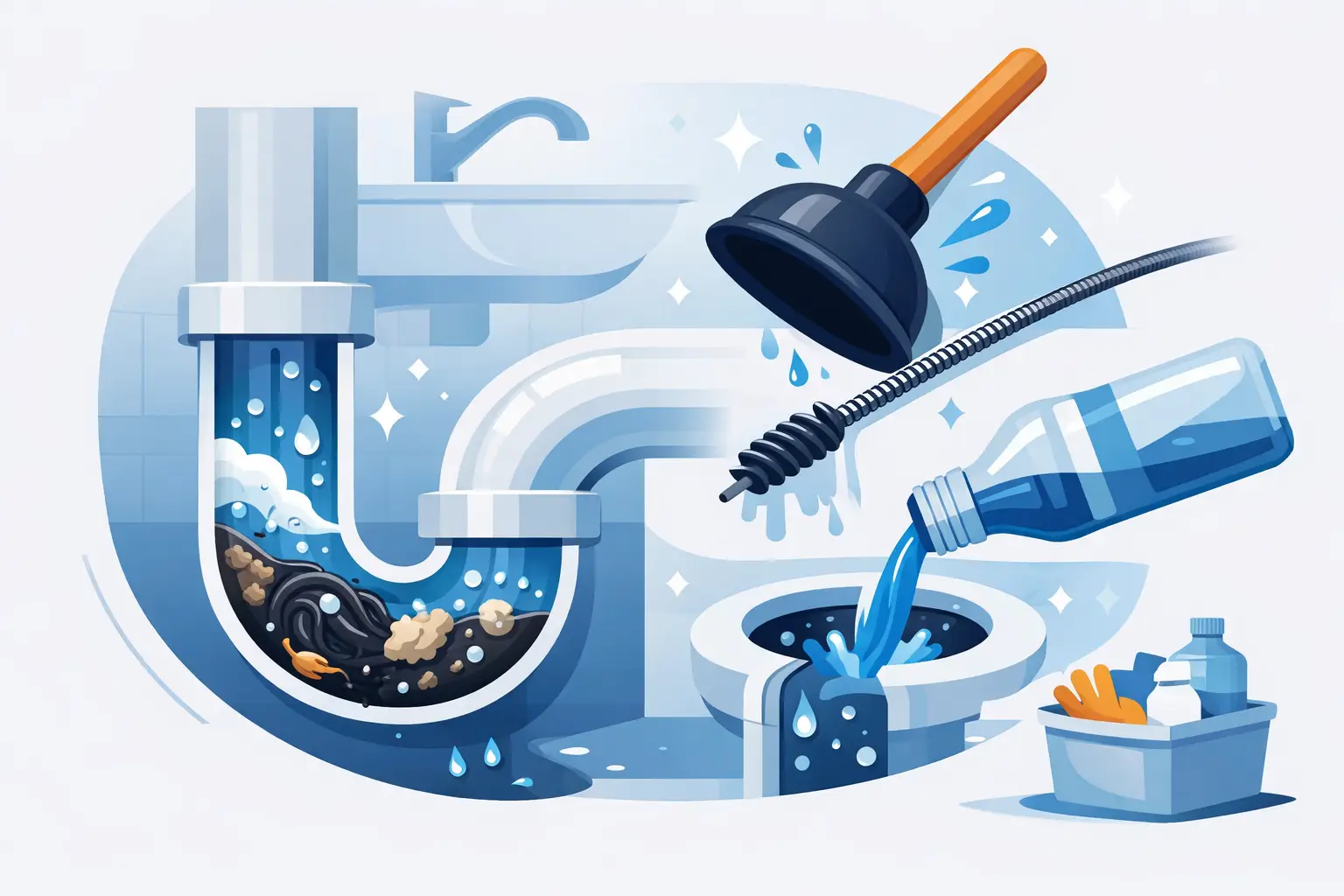
If the drain is still slow, use a plunger. A sink plunger or small cup plunger usually works better than a toilet plunger for this job. Add enough water to cover the plunger cup, create a tight seal, and use steady, controlled pressure. A few strong plunges can often loosen a clog close to the drain opening.
If that does not solve it, move to a drain snake or hand auger. This is often the most effective next step for homeowners. Feed the cable slowly into the drain, turn it as needed, and pull it back carefully. In bathroom drains, this often brings up a mat of hair and sludge. It is unpleasant, but it is also a good sign that you are removing the actual blockage rather than just pushing it farther down.
The right method for each type of drain
Bathroom sink drains
Bathroom sink clogs usually come from hair, toothpaste residue, soap, and grooming products. The pop-up stopper often traps debris before it gets far into the pipe. That is helpful, but it also means buildup can happen fast.
If your bathroom sink is draining slowly, remove the stopper if possible and clean it thoroughly. Many sink clogs are sitting right there. Follow that with hot water and, if needed, a small drain snake. Avoid forcing tools down the drain if you feel resistance right away. Some sink assemblies have tight turns, and too much pressure can damage parts.
Shower and tub drains
Shower and tub drains are usually blocked by hair mixed with soap scum. If water is pooling in the tub or shower pan, a drain snake is often your best first real fix after clearing the drain cover. A plastic hair removal tool can work for shallow clogs, while a hand auger is better for tougher buildup a little farther down.
Once the clog is out, flush the line with hot water. If the drain still backs up after that, the blockage may be deeper in the branch line.
Kitchen sink drains
Kitchen sink clogs are different. Grease, food particles, coffee grounds, starches, and soap residue all contribute. If you have a garbage disposal, that adds another possible trouble spot.
Before doing anything else, make sure the disposal is off. If the unit is jammed or humming without draining, the issue may be in the disposal itself and not only in the drain line. If the sink has standing water and both sides of a double basin are backing up, the clog may be farther down the kitchen drain pipe.
Plunging can help here, but kitchen sink clogs caused by grease often need more than pressure alone. A hand auger can break through or pull out thicker buildup. What you should not do is keep pouring chemical drain cleaner into the line hoping for a better result.
Why chemical cleaners are usually a bad bet
Store-bought drain cleaners promise a quick fix, but they come with trade-offs. Some can damage older pipes, especially if used repeatedly. Others sit in standing water without fully clearing the clog, which leaves you with a blocked drain full of harsh chemicals.
That creates a safety issue for anyone who tries to open the drain later. It can also make professional service more complicated. In many cases, mechanical removal with a plunger or snake is safer and more effective than relying on chemicals.
If a product is labeled safe for your plumbing system and you choose to use it, follow the directions exactly. Even then, it should not be your go-to solution for recurring clogs. A drain that keeps backing up usually needs a proper diagnosis, not another bottle poured into it.
Signs the clog is deeper than it looks
Some drain problems are isolated. Others are warning signs of a larger issue in the plumbing system. If more than one drain is backing up at the same time, or if flushing a toilet causes water to rise in a tub or shower, that points to a deeper blockage in the main line or a shared drain line.
You should also pay attention to recurring slow drains, gurgling sounds, foul odors, or water backing up after you think the clog is gone. Those symptoms often mean the line is only partially cleared or there is buildup farther down that household tools cannot fully reach.
At that point, continuing to poke at the drain can waste time and sometimes worsen the problem. A professional plumber has the equipment to inspect the line, clear the obstruction properly, and check for pipe damage if needed.
When to call a plumber instead of fighting the drain
There is nothing wrong with trying a safe, basic fix first. But there is also a point where the smarter move is to stop and get help.
Call a plumber if the drain is fully blocked and home methods are not working, if multiple fixtures are affected, if sewage odors are present, or if water is backing up into tubs, showers, or floor drains. Those are not small nuisance clogs. They can point to more serious drain line issues that need the right tools and experience.
This also matters if you live in an older home or manage a rental property where plumbing history is not always clear. Older drain lines may already be weakened by corrosion, scale, or previous repairs. In that situation, an aggressive DIY attempt can cause a bigger repair than the clog itself.
A reliable plumbing professional should be able to explain what is happening, clear the blockage cleanly, and tell you if there is a larger issue to watch. That level of clarity matters when you are trying to protect your home and avoid repeat problems.
How to keep drains from clogging again
Once you clean out a drain, a few simple habits can help keep it flowing. In bathrooms, use drain screens to catch hair and clean them regularly. In kitchens, keep grease, oils, and food scraps out of the sink, even if you have a disposal. Run water long enough to move waste through the line, and do not treat the drain like a catch-all.
It also helps to pay attention to small changes. A drain that starts slowing down is easier to deal with than one that is completely blocked. Taking care of buildup early can reduce the chances of a full backup later.
For homeowners and property managers, routine plumbing maintenance is often the difference between a simple service call and a disruptive repair. The Best Quality Plumbing approaches drain problems that way - with practical solutions, clean workmanship, and a focus on fixing the issue correctly.
If you are dealing with a stubborn clog, the safest answer is not always the fastest shortcut. A careful approach protects your pipes, your time, and your home, and that is always the right place to start.