A garbage disposal usually jams at the worst possible time: after dinner, during cleanup, or just before guests arrive. The good news is that many garbage disposal jam fixes are straightforward when the problem is limited to trapped food or a small utensil. The key is treating the unit carefully. A disposal is not a drain cleaner, and forcing it can turn a simple jam into a burned-out motor, a broken flywheel, or a leaking drain connection.
Start With Safety, Not the Switch
If the disposal hums but does not grind, or it stops immediately when switched on, turn it off. Do not keep flipping the wall switch in the hope that it will free itself. Repeated attempts can overheat the motor and may trip the built-in overload protector.
Next, disconnect power. Unplug the disposal if its cord is accessible under the sink. If it is hardwired, switch off the correct circuit breaker before putting any tool near the unit. Do not rely on the wall switch alone.
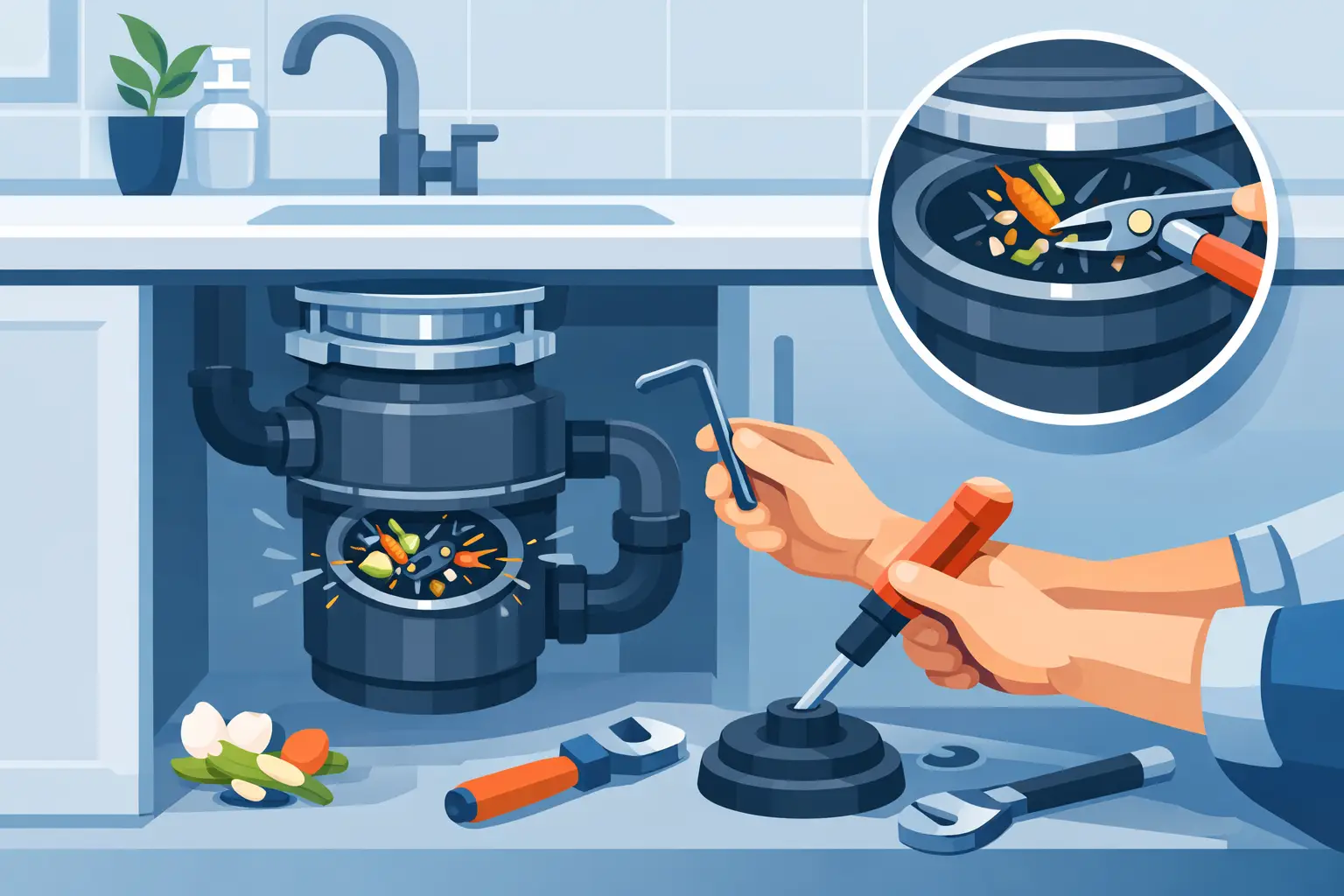
Never reach into a garbage disposal with your hand, even when you think it is off. Broken glass, sharp bones, and small metal objects often cause jams. Use a flashlight to look through the sink opening, then use long kitchen tongs or needle-nose pliers to remove anything visible. Keep your fingers out of the chamber.
The Most Reliable Garbage Disposal Jam Fixes
Check for a trapped object
The most common cause is something that does not belong in the disposal: a spoon, bottle cap, twist tie, small bone, fruit pit, or piece of glass. Remove the object with tongs or pliers. If you cannot clearly see what is caught, do not probe aggressively. You can damage the grinding components or push the object farther into the unit.
Once the object is removed, restore power and run cold water before testing the disposal. Start it briefly. If it runs normally, keep cold water flowing for another 15 to 30 seconds to move debris through the drain line.
Use the disposal wrench underneath
Most modern garbage disposals have a hex-shaped socket on the bottom center of the unit. The manufacturer often includes a small disposal wrench, but a 1/4-inch Allen wrench commonly fits many models.
With power still off, insert the wrench into the socket and move it back and forth. You may feel resistance at first. Work it in short, firm motions until the internal plate moves freely. This action manually rotates the grinder and can release debris caught between the plate and the disposal housing.
Do not use excessive force. If the wrench will not turn or the disposal feels locked solid, the obstruction may be too large or a mechanical part may have failed. At that point, professional service is the safer choice.
Press the reset button after clearing the jam
A disposal that suddenly goes silent may have overheated and tripped its reset button. Look underneath the unit for a small red or black button, usually near the bottom edge. Let the disposal cool for about 10 minutes, then press the button firmly.
The reset is useful only after the jam has been cleared. Resetting a unit that is still stuck can cause it to trip again immediately. If it continues to shut off, the motor may be failing, the unit may be wired incorrectly, or the disposal may have an internal electrical issue.
What Not to Put Down a Garbage Disposal
The best jam repair is avoiding the jam in the first place. A garbage disposal is designed for small amounts of soft food scraps, not for handling everything left on a dinner plate. Even a powerful unit has limits.
Keep these items out of the disposal:
- Grease, cooking oil, and fat, which cool and harden inside the drain
- Fibrous vegetables such as celery, corn husks, onion skins, and artichoke leaves
- Coffee grounds, which can collect in pipes and contribute to clogs
- Pasta, rice, oats, and bread, which expand when exposed to water
- Bones, fruit pits, shells, and hard seeds
- Plastic, metal, glass, paper, and food packaging
Grease deserves special attention. It may pass through the disposal while warm, but it can coat the drain pipe farther down the line. The disposal may sound fine while the kitchen sink begins draining slowly days later. Put cooled grease in a container and throw it in the trash instead.
A Jammed Disposal Can Also Be a Drain Problem
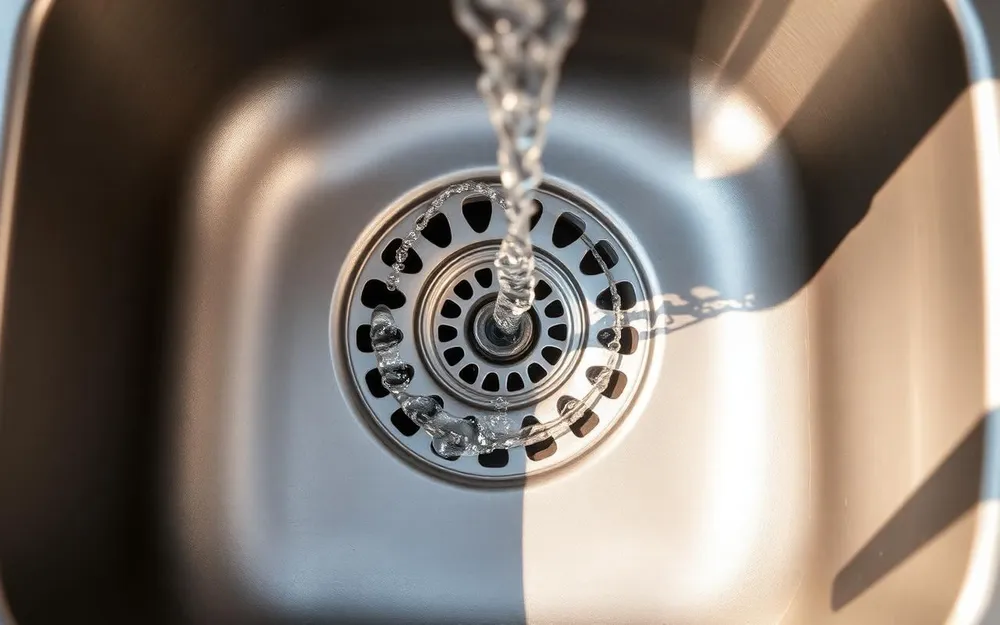
Not every disposal issue is a true jam. If the unit spins normally but water backs up into the sink, the problem is often in the drain trap, the branch line, or a shared kitchen drain pipe. Running the disposal longer will not clear a clog farther down the system.
Avoid pouring chemical drain cleaner into a disposal. These products can be harsh on metal components, rubber seals, and older piping. They also create a safety hazard for anyone who later opens the drain or removes the disposal for repair.
A sink that backs up on both sides of a double-bowl sink, gurgles when the dishwasher drains, or repeatedly clogs after basic cleaning may need professional drain service. Those signs point to a restriction beyond the disposal chamber.
When a DIY Fix Should Stop
A careful homeowner can often remove a visible object, use the manual wrench, and reset an overheated unit. Beyond that, guessing can become expensive. Call a plumber when the disposal leaks from the bottom, makes a grinding or screeching sound after being cleared, trips the breaker repeatedly, or will not turn with the wrench.
Leaks around the sink flange, dishwasher connection, or drain pipe also deserve attention. Sometimes a loose fitting is the cause, but a leak may indicate vibration damage, a cracked housing, or an aging disposal that is near the end of its service life.
Replacement may make more sense than repeated repair when the disposal is old, the motor has failed, or the unit has begun leaking through its sealed bottom housing. A plumber can confirm whether the problem is the disposal itself or a drainage issue that would remain even with a new unit installed.
Keep the Disposal Running Cleanly
Use cold water whenever the disposal is operating. Cold water helps keep fats more solid so they can move through the unit instead of coating its interior. Feed scraps gradually rather than packing the sink opening full at once, and let water run briefly after the grinding stops.
For routine odor control, use a small amount of dish soap and cold water while the disposal runs. Ice cubes can help loosen minor buildup inside the grinding chamber, but they will not solve a serious clog or mechanical jam. Avoid relying on citrus peels as a cleaning method. They may smell fresh, but large amounts of peel can add fibrous material to the unit.
If your garbage disposal keeps jamming despite careful use, there is usually a reason worth finding. Best Quality Plumbing Services helps homeowners and property managers in Sylmar and nearby communities identify whether the issue is trapped debris, a failing disposal, or a kitchen drain problem that needs proper repair.
A disposal should make kitchen cleanup easier, not leave you with standing water and a stalled sink. Shut off the power, clear only what you can safely remove, and get dependable help before a small jam turns into a bigger plumbing repair.