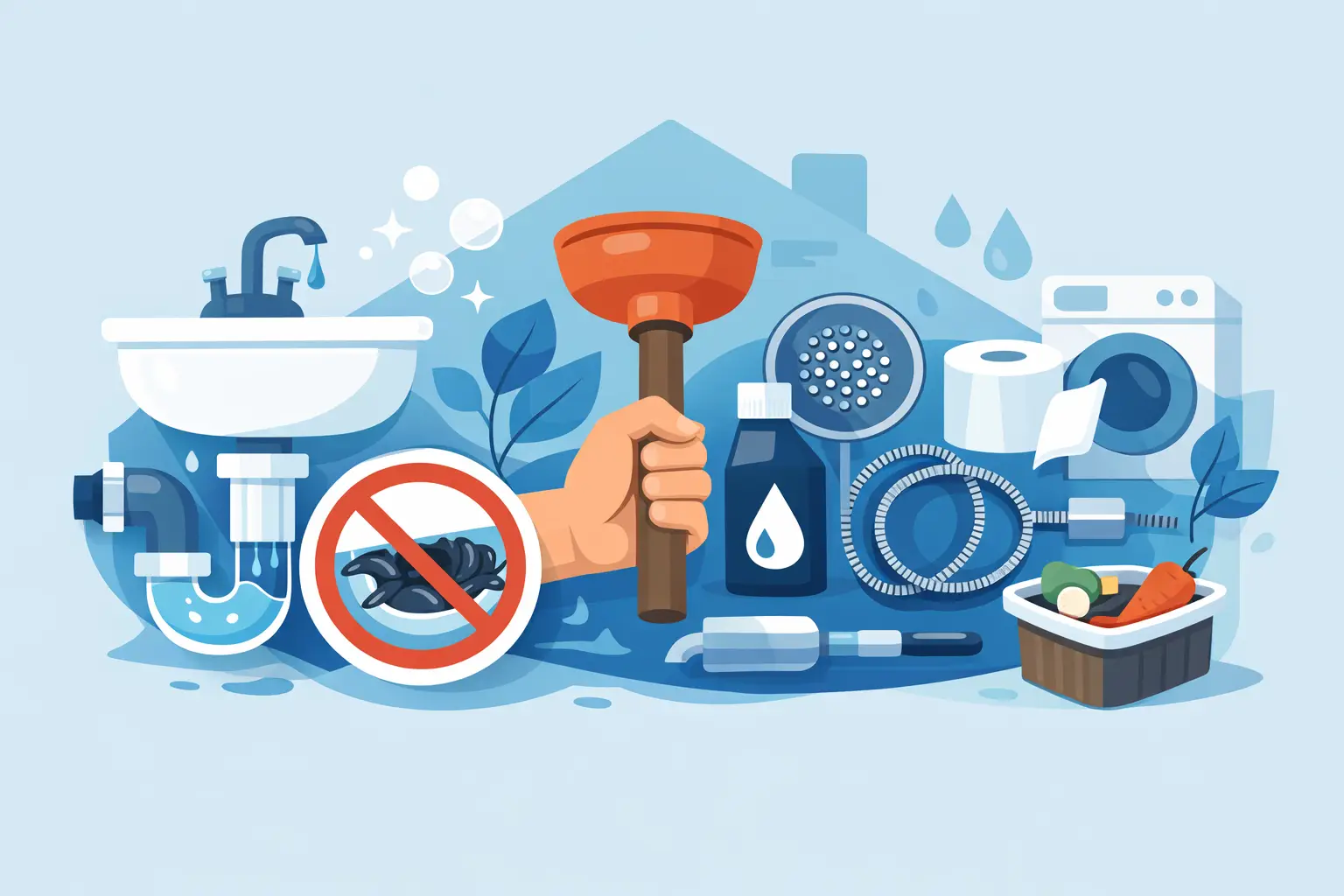
A slow kitchen sink right before dinner or a shower that starts filling around your ankles is more than an inconvenience. It is usually a warning that a full blockage is developing. The best ways to avoid clogs are simple daily habits, but they only work when everyone in the household follows them consistently.
Most drain clogs do not happen all at once. Grease sticks to pipe walls, soap scum narrows bathroom drains, and hair catches small debris until water has nowhere to go. A little prevention protects your plumbing, reduces odors, and helps you avoid an urgent repair call at the worst possible time.
The Best Ways to Avoid Clogs Begin at the Drain
The easiest way to prevent a clog is to keep the wrong materials from entering the drain in the first place. Drains are built to carry water and waste, not every item that is easy to rinse away.
Keep grease out of the kitchen sink
Cooking oil, bacon grease, butter, gravy, and pan drippings may look liquid when they are hot, but they cool and harden inside the plumbing. Once grease coats the pipe, food particles stick to it and build up over time. Even if you run hot water afterward, grease can cool farther down the line and create a blockage there.
Let grease cool in a heat-safe container, then throw it in the trash. Wipe greasy pots and pans with a paper towel before washing them. This small step is one of the most effective protections for a kitchen drain.
Do not rely on a garbage disposal to solve grease problems. A disposal breaks up some food scraps, but it does not keep grease from coating pipes. It also cannot safely handle every type of food waste.
Use a sink strainer every day
A simple mesh or basket strainer catches the scraps that commonly block kitchen drains: rice, pasta, coffee grounds, vegetable peels, eggshells, and small pieces of food. Empty it into the trash after meals instead of pushing debris into the disposal or rinsing it down the sink.
Coffee grounds deserve special attention. They do not dissolve in water and can settle in pipe bends, where they combine with grease into a dense buildup. The same is true of flour and starchy foods. They can form a paste-like material inside the drain.
Treat the garbage disposal as a convenience, not a trash can
Garbage disposals are useful for small leftover bits, but they are not designed for large amounts of food. Fibrous vegetables such as celery, corn husks, artichoke leaves, and onion skins can wrap around disposal components or collect in the drain. Bones, fruit pits, pasta, rice, and large quantities of potato peels can also create trouble.
When using the disposal, run cold water before turning it on, keep the water running while it operates, and let it run briefly after the food is gone. Cold water helps carry particles through the line and is especially helpful if there is any residual grease. If the disposal hums without grinding or the sink backs up, turn it off and avoid putting more food into it.
Catch hair before it reaches the bathroom drain
Hair is the leading cause of many shower, tub, and bathroom sink clogs. It tangles around the drain opening and traps soap, toothpaste, skin oils, and other residue. Over time, that small collection becomes a stubborn blockage.
Install a hair catcher in showers and tubs, and clean it regularly. A bathroom sink stopper also collects hair and residue underneath, so remove and clean it when water starts draining more slowly. This task takes only a few minutes and can prevent the need for a drain snake later.
What Should Never Go Down a Toilet
Toilets are built for human waste and toilet paper. Products described as "flushable" may technically pass through the toilet, but many do not break down quickly enough to move safely through household plumbing. They can catch on rough pipe surfaces, combine with other debris, or create problems farther down the sewer line.
Keep a covered trash can within reach and dispose of wipes, paper towels, tissues, cotton balls, dental floss, feminine hygiene products, diapers, and cleaning pads there. Dental floss is particularly troublesome because it can wrap around other material and form a net inside the pipe.
Use only a reasonable amount of toilet paper per flush. If a toilet requires frequent plunging, gurgles after flushing, or backs up without an obvious cause, do not keep flushing it. The blockage may be beyond the toilet trap, and repeated flushing can cause an overflow and water damage.
Clean Drains Without Damaging Your Pipes
Routine cleaning can help, but harsh chemical drain cleaners are not a good long-term maintenance plan. Many contain corrosive ingredients that create heat and can be hard on older pipes, seals, and fixtures. They can also leave dangerous chemicals sitting in a blocked drain, creating a safety risk for anyone who later tries to clear it.
For normal maintenance, remove visible debris from stoppers, strainers, and drain covers. Flush bathroom and kitchen drains with hot tap water periodically, especially after washing greasy dishes. Hot tap water is generally enough for routine flushing. Avoid pouring boiling water into porcelain fixtures or PVC piping, since sudden high heat can cause damage depending on the fixture and pipe condition.
A plunger is often the right first tool for a minor clog. Use a clean sink plunger for sinks and tubs, and a flange plunger for toilets. If plunging does not restore normal drainage after a few careful attempts, stop before forcing the problem deeper into the line.
Do Not Ignore Slow Drains and Gurgling Sounds
Slow drainage is not something to watch for months. It is the early stage of a clog, and addressing it early is usually easier than dealing with a complete backup. One slow fixture may point to a local issue, such as hair in a shower drain or buildup in a sink trap.
Several slow drains at once are more serious. For example, if the toilet bubbles when the washing machine drains, or water rises in a tub after flushing, the issue may involve a shared drain line or the main sewer line. Gurgling, sewage odors, and water backing up from a lower drain are all signs to call a professional promptly.
Tree roots, aging pipes, shifted sewer lines, and heavy buildup are not problems that household products can reliably fix. A professional diagnosis helps identify where the blockage is and prevents repeated short-term fixes that do not solve the real cause.
Pay Attention to Laundry and Utility Drains
Laundry drains handle more lint, detergent residue, and fabric fibers than many homeowners realize. Clean the washing machine lint trap if your appliance has one, and avoid using more detergent than the manufacturer recommends. Excess detergent can leave residue in the drain line, particularly with some concentrated products.
Utility sinks and floor drains also need attention. Do not rinse paint, plaster, grout, or construction debris into them. These materials can harden in pipes and require more extensive repair. If a floor drain has a dry smell, pouring some water into it occasionally can help maintain the trap seal and reduce sewer odors.
Give Older Plumbing a Preventive Check
Older homes and rental properties can be more prone to recurring clogs because pipe interiors may be rough, corroded, narrowed by mineral buildup, or affected by previous repairs. In these cases, careful habits still help, but repeated clogs may indicate that cleaning the drain is only a temporary answer.
Property managers and homeowners should track recurring trouble spots. If the same sink, toilet, or shower clogs repeatedly, note what was happening when it occurred and how quickly the drain slowed again after clearing. That information helps a plumber diagnose whether the issue is a fixture-level blockage, a damaged pipe, or a larger line problem.
For homeowners in Sylmar and nearby communities, Best Quality Plumbing Services can inspect recurring drainage problems, explain the cause clearly, and recommend the right repair without unnecessary confusion.
A drain that clears once but slows again is asking for attention. Take care of it while water is still moving, keep problem materials out of the plumbing, and call for help before a small blockage turns into a messy backup.